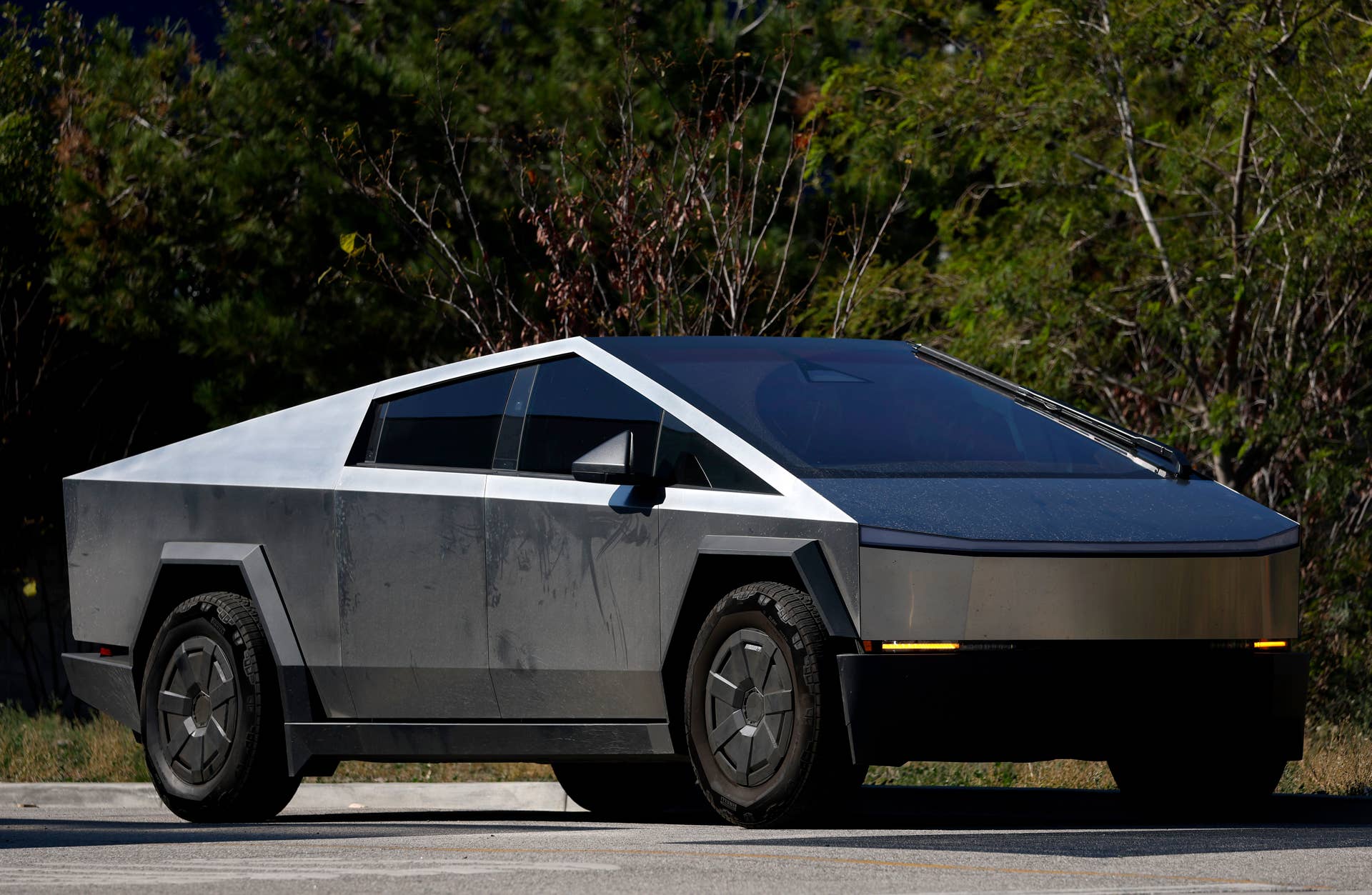
Tesla’s Cybertruck was supposed to change America’s pickup market.
Rather, only four years after deliveries started, the electric vehicle is nearing the end of its manufacturing cycle.
Tesla (TSLA) CEO Elon Musk plans to discontinue the Cybertruck in 2027, freeing manufacturing capacity at the company’s Texas factory for its Cybercab robotaxi.
The choice represents a withdrawal from one of Tesla’s most ambitious car launches.
The greater surprise, however, is what Musk is prepared to give up.
Although the Cybertruck hasn’t been able to draw in customers, Tesla is preparing to replace its manufacturing capacity with a driverless car whose long-term economic potential remains uncertain.
Tesla’s Cybertruck is near the end
Musk originally planned to halt manufacturing in the middle of 2027, but to complete more unfulfilled orders, he decided to prolong production to the end of summer 2027.
Additionally, he has cautioned that many customers who may not get their trucks would need to have their deposits returned by Tesla.
The company plans to redirect manufacturing resources toward the Cybercab, which has become central to Musk’s autonomous-driving ambitions, according to Reuters.
Beyond the fate of a single electric pickup, the decision poses questions for investors.
Is it possible for Tesla to generate more money creating robotaxis than selling cars to regular Americans?
Related: Tesla and Nvidia just found another AI bottleneck
Tesla’s Cybertruck fell far short of Musk’s expectations
Musk said that the Cybertruck, which Tesla announced in 2019, might rival the most well-liked pickup trucks in America.
In the past, he proposed that Tesla could sell 250,000 units annually.
The real world turned out to be quite different.
U.S. Cybertruck sales declined 48% to just 20,237 vehicles in 2025, according to Reuters.
That amount is only about 8% of Musk’s previous yearly sales goal.
Pricing was another issue with the Cybertruck.
The $39,900 starting price was replaced by much more expensive models when deliveries began in late 2023.
More Tesla:
- Tesla stock sellers should pump their brakes, 5-star analyst says
- Bank of America resets Tesla forecast as Robotaxi miles double
- Tesla wants to sell a car with no steering wheel this year
Its divisive stainless-steel design, recalls, and restricted international market prospects made the truck’s challenges worse.
Meanwhile, the more reasonably priced Model 3 and Model Y remained crucial to Tesla’s overall business.
The Cybertruck was intended to increase Tesla’s market share in the lucrative pickup industry in the United States. Rather, it served as a warning that technical innovation does not always result in demand from the general public.
Tesla sees greater value in Cybercab production
The idea that the Cybertruck is being terminated only because it is not lucrative has been denied by Musk.
He contends that shifting the manufacturing resources used for the complex pickup to the manufacture of Cybercabs would result in higher value.
That difference is important.
Tesla isn’t just switching its models. Resources are being transferred from a traditional consumer car to a company that is becoming more and more reliant on autonomous driving technologies.
According to the company’s second-quarter manufacturing report, its Texas plant can produce more than 125,000 Cybertrucks annually.
Additionally, it said that the Cybercab’s capacity exceeded 125,000 units.
Tesla’s own disclosures therefore underline how substantial the manufacturing decision could become.
Installed capacity does not indicate how many cars Tesla is manufacturing or selling.
However, Musk’s choice may stem from the discrepancy between the Cybertruck’s actual sales and its production capacity.
Tesla may keep investing personnel, expensive machinery, and manufacturing space in a product with no market demand.
Alternatively, it may spend those funds to develop a car that Musk thinks would serve as the foundation for a much bigger autonomous-driving company.
The promise of Cybercab has not yet materialized into a successful company at the size Tesla intends, which poses a financial risk.
The business must show that its autonomous cars can function dependably, draw in paying clients, and bring in enough money to cover the cost of production.
Tesla’s next challenge is bigger than the Cybertruck
Tesla’s most recent production numbers show how much is still up for grabs.
According to its official October release, the carmaker delivered 486,532 automobiles in the third quarter of 2026.
Only 8,295 belonged to its combined category of other models, which includes vehicles outside the Model 3 and Model Y lineup, according to Tesla.
This indicates that almost 98.3% of all car deliveries were of the company’s two popular models.
The graph highlights how little Tesla’s other cars presently add to the company’s total delivery volume.
For current owners, Musk’s decision to stop the Cybertruck may potentially have consequences.
In addition to raising concerns about future parts availability and service support, ending manufacturing may have an impact on opinions of the vehicle’s long-term resale value. However, those results are yet unknown, and Tesla has said current owners would continue to get service.
The reduced manufacturing window presents a new issue for potential purchasers.
Before Tesla stops the line, even buyers with reservations could not get a Cybertruck.
The most important question for stockholders is whether rerouting capacity to the Cybercab yields higher profits.
The Cybertruck’s cancellation may later seem to be a wise production choice if autonomous cars grow to be a significant commercial enterprise.
Tesla runs the danger of trading an unsuccessful product for another costly wager if adoption fails.
In essence, Musk is asking investors to evaluate the firm more on the autonomous-driving business he thinks it can develop than on the vehicles it already sells.
The Cybertruck’s demise demonstrates how much Tesla is prepared to give up in order to achieve that goal.
Related: Tesla wants to sell a car with no steering wheel this year