If you were hoping airfares would quietly retreat in 2027, United Airlines CEO Scott Kirby just delivered the opposite message.
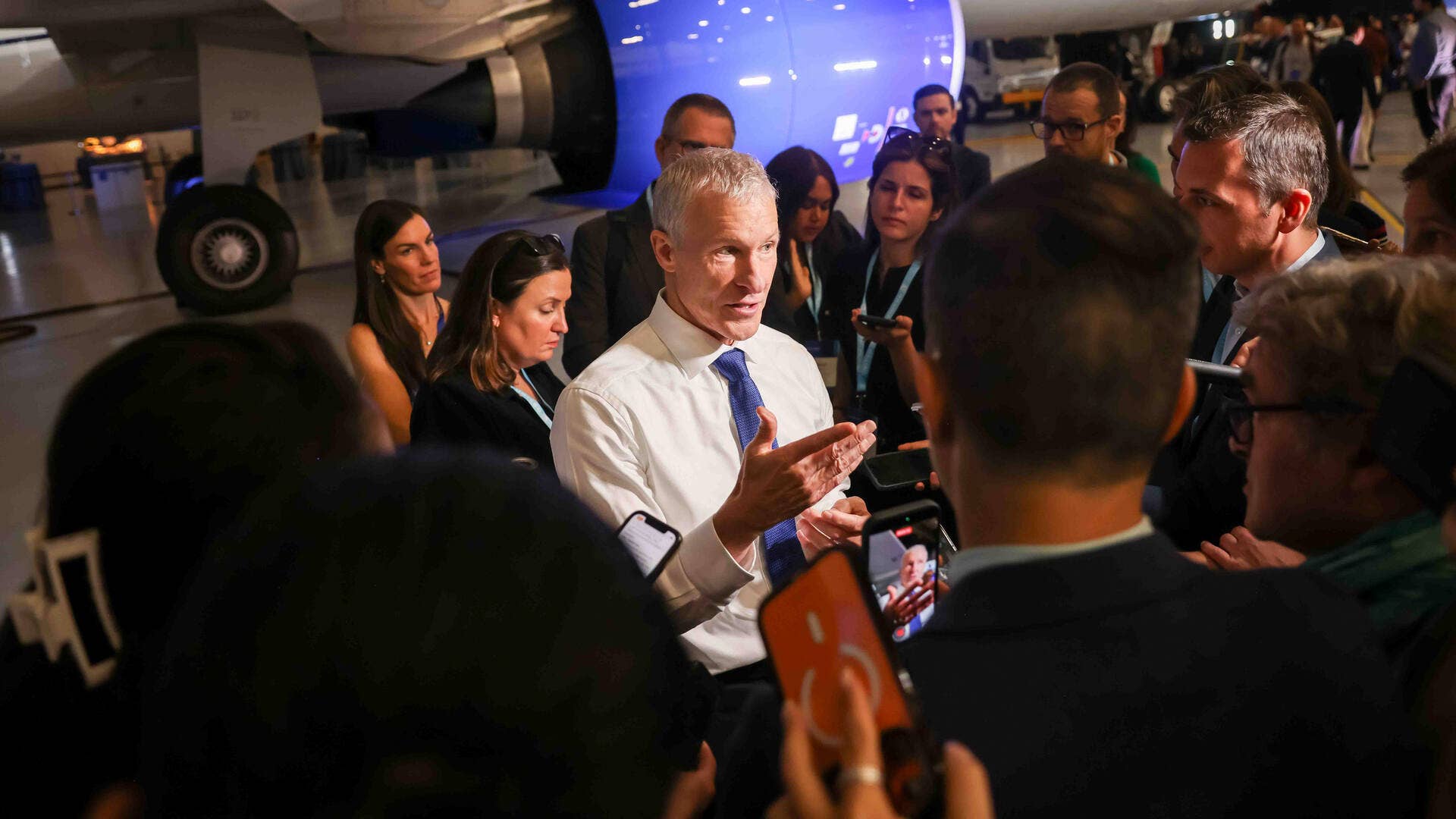
Speaking to reporters Tuesday, Aug. 25, in Newark, Kirby said he expects fares to keep rising into the first half of next year, just not as sharply as this year’s increases.
“I think you’re going to still see gradual increases in fares. Not as big a jump as happened this year,” he said, according to Reuters.
That matters for anyone who flies and for anyone who invests in airlines. U.S. fares were up 25.5% in July compared to a year earlier, and were roughly 25% higher on average from April through July, according to the U.S. Travel Association.
The Iran war, oil price surge, and the Strait of Hormuz are key contributors to that extraordinary jump.
What Kirby is saying is that even as those specific shocks moderate, the underlying structural trend in airfare is still upward.
UAL trades near $112.39, up just 0.51% year-to-date compared to the S&P 500’s 12.94% gain, according to Yahoo Finance.
Also Read: United Airlines Holdings Recent News and Stories
The demand picture Kirby described and why it changes the fuel math
The central tension in the airline business right now is simple: fuel costs are significantly higher than a year ago, but so is passenger willingness to pay.
Kirby said United has seen no meaningful weakening in travel demand despite higher fares and geopolitical uncertainty.
More Airlines:
- Another airline cancels flights until August, offers some refunds
- Another airline will be dissolved, all flights canceled
- Airline shuts down, all flights grounded after accident
“There really hasn’t even been a blip in demand,” he said. “Demand is very, very strong across the board.”
That demand strength is what gives United confidence on the fuel cost recovery trajectory. The company expects to absorb nearly $6 billion in additional fuel expense for full-year 2026 relative to its initial estimates, according to Q2 earnings disclosures.
Q2 fuel expense alone rose 84% year-over-year to $2.3 billion above the prior year level, and United recovered approximately half of that increase through higher fares and better capacity management.
Related: United Airlines CEO has 3 surprising words after key rival’s firing
The recovery trajectory Kirby has laid out is sequential, according to the Reuters report: 50% in Q2, 80-90% in Q3, and 100% by Q4.
When asked whether $4-per-gallon jet fuel would prevent a full Q4 recovery, Kirby was appropriately cautious but directionally optimistic.
Given the strength in demand, I think we’ll still recover 100% in fourth quarter.
Kirby also addressed the longer-term pricing context. Despite this year’s increases, airfares remain approximately 13% below pre-pandemic levels after adjusting for inflation.
“We’re going to return to sort of a normalized fare level where airlines can be profitable enough to reinvest,” he said.
The word “reinvest” is doing real work in that sentence. It signals fares need to keep rising for the industry’s capital structure to function sustainably.
The operational progress that supports a premium fare strategy
Kirby’s fare outlook is about more than fuel costs. It reflects a United that has been investing aggressively in the product it sells — and, in doing so, has given itself more pricing power than it might otherwise have.
The Q2 results, covered in my earlier reporting, showed second-quarter on-time performance at its best since 2021. Newark posted its best-ever second-quarter on-time results.
United flew the largest domestic schedule in company history, serving 240 airports in the U.S. and Canada. Customer satisfaction scores hit their highest level for a Q2 since 2021, with records across check-in, food and beverage, and inflight entertainment.
Related: United Airlines cuts 10 routes, offers refunds
Starlink Wi-Fi, which delivers customer satisfaction scores more than twice as high as other connected flights, is now on 450 aircraft, with nearly 1,000 expected by year-end, according to the Q2 earnings report.
United launched Starlink on its first widebody transatlantic flight in Q2 and is on track to equip nearly 60 widebody aircraft this year. The A321XLR, the first narrowbody featuring United’s elevated interior with Polaris and Premium Plus seating, is now in service.
Each of these investments supports the premium pricing strategy Kirby is describing. Airlines can charge more when the product is demonstrably better. And United’s satisfaction scores and on-time performance suggest the product is improving.
What the 2027 airfare outlook means for investors and travelers alike
The guidance Kirby gave on Aug. 25 is essentially a preview of United’s pricing strategy heading into 2027: moderate and sustainable fare increases underpinned by strong demand rather than crisis-driven spikes.
Full-year 2026 adjusted EPS guidance remains at $9.00-$11.00, raised from the original range despite the fuel shock, according to Q2 earnings disclosures.
Aircraft deliveries are “back largely on pace,” Kirby said, addressing a supply chain issue that had complicated fleet planning. The $3.7 billion in new liquidity raised in Q2 provides a buffer against further oil price volatility.
Related: United Airlines stark warning could make your next flight more expensive
For travelers, the practical takeaway is that booking early in 2027 will matter. “Gradual increases” is polite language for prices going up.
For investors, UAL at $112 and virtually flat year-to-date has significantly lagged the broader market, reflecting investor caution around its fuel exposure. If Kirby’s Q4 full-recovery scenario plays out and demand holds through the winter travel season, that gap may start to close.
Demand being “very, very strong” with no blip is the key variable. As long as that holds, everything else in Kirby’s outlook follows.
Related: United Airlines CEO Scott Kirby signals a major business shift