United Colors of Benetton continues to shrink its global retail footprint, closing prominent stores in major destinations as the fashion retailer pushes ahead with a sweeping restructuring plan.
Founded in 1965, United Colors of Benetton built a global following for its bright color palettes, knitwear, and often controversial advertising campaigns that tackled social, political, and religious issues.
Now, the company is attempting to turn around its struggling business after years of financial losses, store closures, and operational changes. Its latest shutdowns underscore how dramatically the once-expansive fashion retailer is scaling back its physical presence.
United Colors of Benetton closes two major stores
United Colors of Benetton recently closed two prominent European stores.
The impacted locations include:
- Paris, France: The three-story, more than 10,700-square-foot store at 3 Place de l’Opéra closed on Sept. 30 after 25 years of operation.
- London, U.K.: The 16,000-square-foot store at 89 Oxford Street closed on Oct. 18, ending an eight-year run at the prominent shopping destination.
Despite the Paris closure, United Colors of Benetton continues to operate two stores in the French capital, with one at 147 rue de Rennes in the 6th arrondissement and another at 71 rue de Passy in the 16th arrondissement.
The London shutdown marks the end of the brand’s physical retail presence in the U.K. The company once operated nearly 60 stores in the country at its peak about a decade ago.
However, the closure does not necessarily represent a complete withdrawal from the British market, as United Colors of Benetton products remain available through online sales channels.
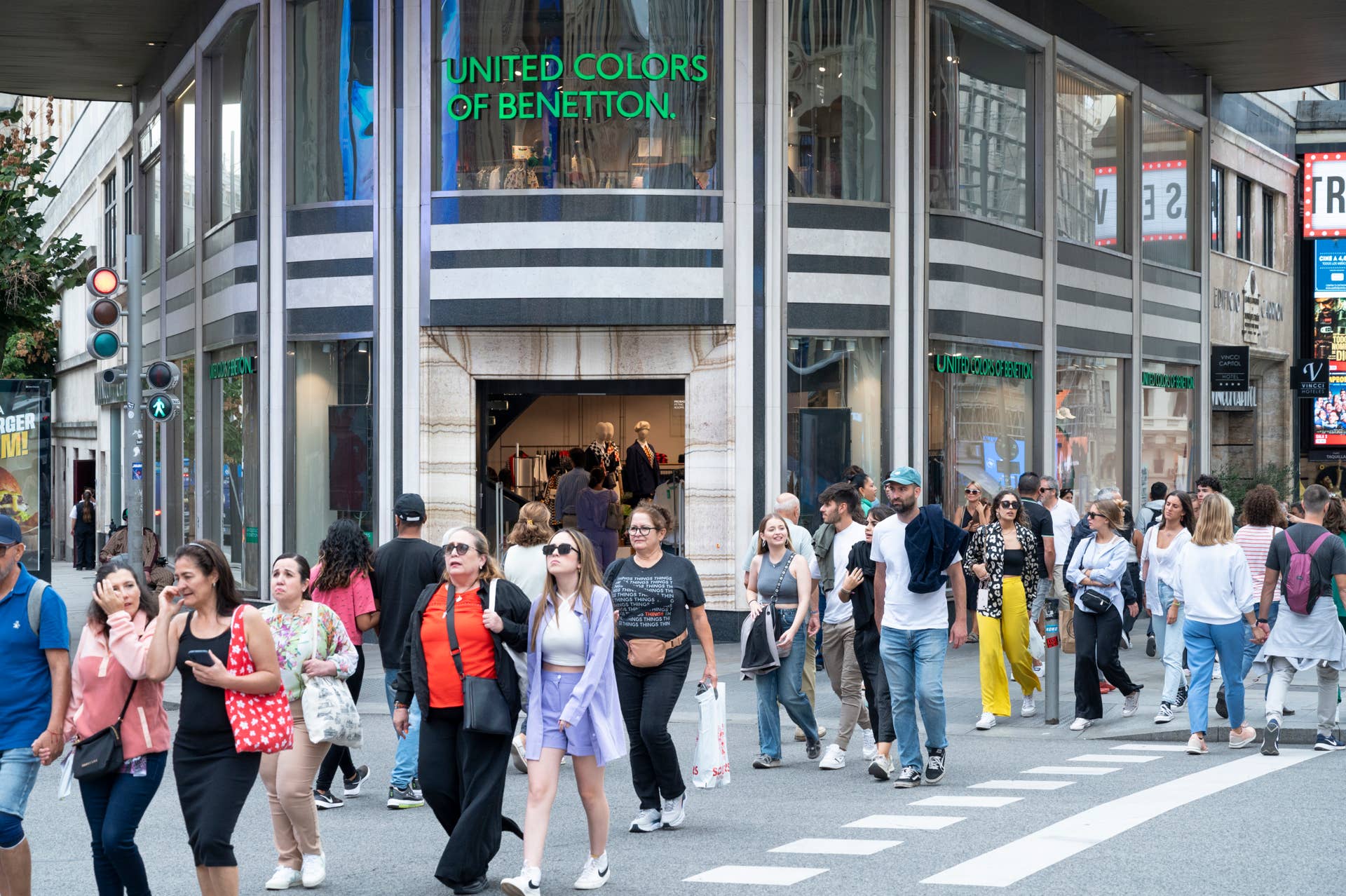
Why United Colors of Benetton is closing stores
The closures are part of a major financial restructuring program intended to reduce operating costs, streamline distribution, and restore profitability after years of losses.
In late 2024, United Colors of Benetton CEO Claudio Sforza began implementing a turnaround strategy that included plans to close hundreds of underperforming stores.
The company had operated approximately 3,500 locations worldwide, and reports at the time indicated that around 500 stores could be eliminated, with a significant share of the closures taking place in Italy, Fashion Network reported.
Here’s some of my previous coverage of retail store closures:
- Celebrity-loved fashion brand shuts down after 13 years
- Harvey Nichols closes more stores as others are rebranded
- Gucci owner closes over 128 stores with more to come
The restructuring also involves strengthening the company’s digital sales channels, reviewing its wholesale and franchise relationships, and concentrating resources on more efficient operations.
The scale of the challenge was reflected in Benetton Group’s 2024 financial results. The company reported revenue of approximately €917 million, down from more than €1 billion in 2023. However, its net loss narrowed to about €100 million in 2024 from €230 million the previous year, according to Reuters.
The improvement continued in 2025. Benetton Group reported that its net loss fell further to around €33 million, while revenue declined to under €800 million, Fashion United reported.
The company’s global distribution network has also been reduced to approximately 2,700 stores across 80 countries.
These figures suggest that the restructuring is helping reduce losses, although the continued decline in revenue highlights the difficulty of returning the business to sustainable growth.
The company has also received financial support from Edizione, the Benetton family’s holding company, which committed a €260 million capital injection in 2024 to support the restructuring, Reuters reported.
Beyond its retail operations, United Colors of Benetton is reviewing its manufacturing and supply chain structure. The company has worked to shorten collection development and production cycles, reduce finished-goods costs, and rely more heavily on external suppliers.
The restructuring has also involved shutting down production facilities, including the Osijek factory in Croatia in late 2024 and a manufacturing plant in Niš, Serbia, in April 2025, Fashion Network reported.
The company has also reduced its workforce as part of its cost-cutting efforts, with previous restructuring reports detailing employee reductions and organizational changes.
What United Colors of Benetton’s restructuring means for its future
United Colors of Benetton’s strategy reflects the challenges facing traditional fashion retailers as they compete with companies that can respond more quickly to changing consumer preferences and manage inventory and production costs more efficiently.
The brand also faces competition from international fashion retailers that operate with shorter production cycles and more responsive inventory models, putting pressure on traditional clothing brands to control costs while keeping their collections aligned with changing shopping habits.
For United Colors of Benetton, reducing its store count is only one part of the turnaround. The company must also strengthen its online business, improve product competitiveness, and rebuild revenue while maintaining the brand recognition it developed over decades.
Although its losses have narrowed considerably, declining revenue shows that the turnaround is not complete.
Whether the restructuring can translate into renewed sales growth and restore United Colors of Benetton’s former position in the global fashion industry remains to be seen.
Related: Sporting goods chain with big in its name keeps getting smaller