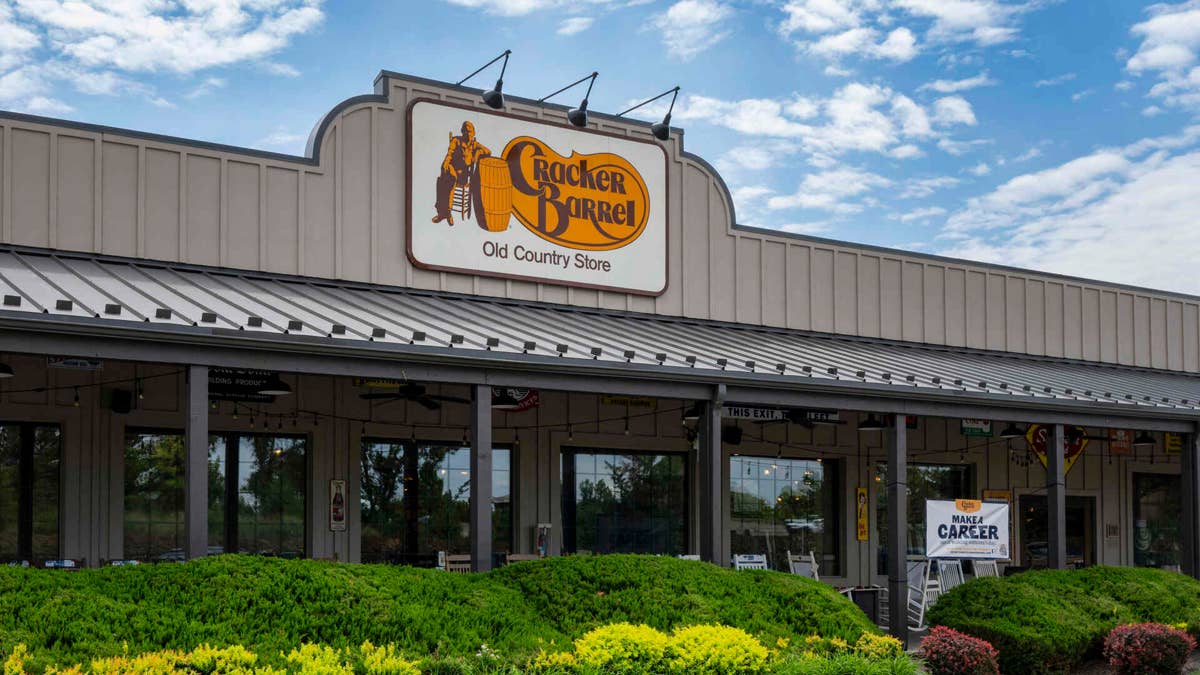
Every turnaround story has two versions. There’s the one management tells us and the one we notice hiding in the numbers. Cracker Barrel (CBRL) recently served up both.
On Tuesday evening, June 9, the 56-year-old comfort-food chain reported fiscal Q3 2026 results that beat Wall Street‘s expectations across the board. The stock jumped overnight. By a big margin, actually. And CEO Julie Masino struck an encouraging tone in the company statement.
“Our initiatives to improve operations, deepen guest connection, and enhance profitability continue to gain traction,” Julie said. “We are well-positioned to sustain this new momentum.”
Then, Wall Street veteran analyst Stephen “Sarge” Guilfoyle, whose career stretches back to the floor of the New York Stock Exchange in 1987, looked at the balance sheet and used exactly two words in his trade ideas section in TheStreet Pro to describe what he found: dumpster fire.
According to Forbes, this is the same company that stumbled badly through an ill-fated rebranding in August 2025, removing its beloved Uncle Herschel character from signage before reversing course by the end of that month. The logo came back. Yes. But the financial scars from years of struggles? They have not.
What Cracker Barrel’s Q3 results actually showed
To be fair, the quarter itself wasn’t bad, especially relative to expectations.
Key Q3 fiscal 2026 highlights:
- Total revenue: $797.4 million, down 2.9% year-over-year (YoY)
- GAAP EPS: $1.90, up dramatically from $0.56 in the prior year quarter
- Adjusted EPS: $0.29, down from $0.58 in the year-ago period
- Adjusted EBITDA: $40.3 million, down from $48.1 million a year ago
- Comparable store restaurant sales: down 2.6% YoY
- Comparable store retail sales: down 1.8% YoY
Source: Cracker Barrel Third Quarter Fiscal 2026 Results
The GAAP EPS surge deserves an asterisk. It includes a $47.4 million benefit from a litigation settlement related to interchange fees — a one-time item that significantly inflated the headline number, according to the company statement.
Strip that out, and the adjusted picture is more sobering: adjusted net income of $6.533 million, or $0.29 per share, down from $0.58 in the same period last year.
More Restaurants
- 30-year-old restaurant has closed all restaurants
- After bankruptcy, Hooters closes restaurants, fights for survival
- Iconic Las Vegas Strip restaurant closes without warning
On the cost side, Cracker Barrel is making genuine progress. Cost of goods sold contracted 3% YoY. Labor expenses contracted 1%. Other operating expenses fell 4%. Administrative expenses were the one line moving in the wrong direction, up 7%, according to the Crackers’ statement.
The operational streamlining is real. It’s just happening against a backdrop of declining sales.
Why did Guilfoyle call the balance sheet a dumpster fire?
Here is where the story turns uncomfortable, and where Guilfoyle’s blunt assessment earns its credibility.
My review of the balance sheet data tells a stark story:
- Cash position: $26.05 million
- Short-term debt due within 12 months: $149.85 million
- Long-term debt: $336.783 million
- Total debt: $486.6 million
- Current assets: $290.552 million, according to TheStreet Pro
- Current liabilities: $580.055 million, according to TheStreet Pro
- Current ratio: 0.50, according to TheStreet Pro
Source: Cracker Barrel Third Quarter Fiscal 2026 Results
A current ratio of 0.50 means Cracker Barrel has fifty cents of current assets for every dollar of current liabilities.
A ratio below one is considered a warning sign for liquidity.
A ratio of 0.50, as Guilfoyle noted, would need great and serious improvement just to be considered atrocious.
The most pressing issue is the $149.9 million in convertible senior notes that mature in June 2026, according to the company’s statement.
The company intends to pay that obligation by drawing on its revolving credit facility, which had approximately $541.3 million in available capacity at the end of the quarter.
Related: Cracker Barrel brings back beloved ’90s menu item
That solves the immediate problem. But pause first. It replaces bond debt with credit facility debt, and leaves a company generating $4.61 million in quarterly free cash flow sitting beneath $486 million in total obligations.
Cracker Barrel also paid $17.561 million in cash dividends during the quarter, out of $4.61 million in free cash flow, according to Cracker Barrel data.
The board declared another quarterly dividend of $0.25 per share, payable Aug. 12, 2026, according to a company statement. Crunch the numbers, and you find out that the dividend is being funded by the credit facility, not by operations.
The guidance raise that sent shares higher, and what it doesn’t fix
Despite balance sheet concerns, Cracker Barrel raised its full-year 2026 outlook meaningfully. A big reason why the shares traded higher on earnings night.
- Revenue guidance: raised to $3.27 billion to $3.30 billion, from $3.24 billion to $3.27 billion
- Adjusted EBITDA guidance: raised to $120 million to $125 million, from $85 million to $100 million — a significant step up
- Commodity inflation: now expected in the low 2% range, improved from the prior 2.0% to 2.5% outlook
- Hourly wage inflation: now expected in the low 2% range, down from 2.5% to 3.0%
Source: Cracker Barrel Third Quarter Fiscal 2026 Results
The rise in adjusted EBITDA also had a positive effect on the price. Going from the $85 million – $100 million range to $120 million – $125 million is a 25% increase at the midpoint — and it reflects genuine operating improvement, lower input costs, and better wage trends.
But context matters. Even at $122.5 million in adjusted EBITDA, Cracker Barrel is a business generating barely enough cash to service its debt, fund minimal capital expenditure of $105 million to $115 million, and pay a dividend it technically can’t afford from free cash flow alone, according to company data.
The stock’s split personality and what it tells investors
CBRL shares were up an astounding 84.45% year-to-date as of June 11, 2026, according to Yahoo Finance data. That sounds remarkable until you see the other numbers.
The stock is down 14.95% over the past year, down 43.09% over three years, and down 63.47% over five years. The S&P 500 returned 22.75%, 71.96%, and 74.04% over those same periods.
The year-to-date surge reflects a combination of the rebranding recovery, improving operational metrics, and short-covering in a stock that had been heavily punished. It doesn’t reflect a balance sheet that has been fixed — because it hasn’t.
Masino’s turnaround narrative is gaining some traction in the dining room. The financial story being told in the footnotes remains, in Guilfoyle’s two-word verdict, something far less appetizing.
Related: Two giant pizza chains closing over 200 restaurants each