Gold staged a relief bounce on Monday morning, Nov. 23, climbing as high as 2.6% toward $3,630 an ounce before hovering near $3,600, and it felt tempting to assume the worst might be over.
After all, the shiny yellow metal is coming off its steepest weekly plunge in eight months, a nearly 9% to 9.5% rout, dragging spot prices to a 14-month low of $3,513.54 on Nov. 20, leaving gold 37.1% below its Jan. 28 record of $5,589, as covered by CNBC.
Before rushing to buy that dip, however, investors should listen to Ole Hansen. As Saxo Bank’s Head of Commodity Strategy since 2010, Hansen is perhaps one of the most respected voices in precious metals.
When gold first crossed the $3,000 mark in March 2025, he stood by his $3,300 call, nailed it within weeks, and accurately bumped his target to $3,500. Just as crucially, on Nov. 2, 2026, Hansen warned that breaking below $3,970 exposed gold to deeper selling, after earlier flagging $3,700 as a downside risk.
Both calls played out as expected, and now he’s warning that the rout may not be finished.
Why Ole Hansen says gold is being used as Wall Street’s ATM
In a new Saxo Bank note, Hansen looked past the usual chatter about a hawkish Federal Reserve and a surging U.S. dollar.
Instead, he looked at a far more dangerous culprit in a tightening dollar liquidity across a stressed financial system.
“Rising financing requirements linked to AI infrastructure, IPO activity, equity market volatility, and elevated energy security costs may be increasing demand for cash just as higher rates make borrowing more expensive,” Hansen wrote, warning those pressures “risk creating a self-reinforcing cycle of dollar demand and asset liquidation.”
That explains why the king metal didn’t behave like a typical safe haven during last week’s tech rout.
“Gold is particularly vulnerable during such periods, not because its longer-term appeal has necessarily diminished, but because its deep liquidity makes it an accessible source of cash,” Hansen noted.
Investors that are up against margin calls or stock market losses sell whatever converts to dollars fastest.
Even more concerning is what hasn’t cracked yet. According to Bloomberg data in Hansen’s Nov. 20 weekly update, global gold ETF holdings stayed near 3,140 tonnes, despite a roughly 10% monthly drop in bullion.
Gold held up relatively well, but Hansen warns that worsening dollar liquidity or another stock market crash might compel even long-term investors to sell.
Although gold is trading 18% below its 200-day average, its lowest relative level since 2013, high borrowing costs and economic uncertainty might end up delaying a recovery.
How Hansen’s gold outlook stacks up against Wall Street’s biggest banks
Hansen’s stark warning carries added weight because he isn’t a gold bear.
In fact, when he spoke with DeVere Group in September, Hansen argued that January’s $5,600 peak remains achievable and he didn’t dismiss $6,000 in 2027, citing central-bank diversification, U.S. debt above $40 trillion, and geopolitical fragmentation.
More Gold & Silver:
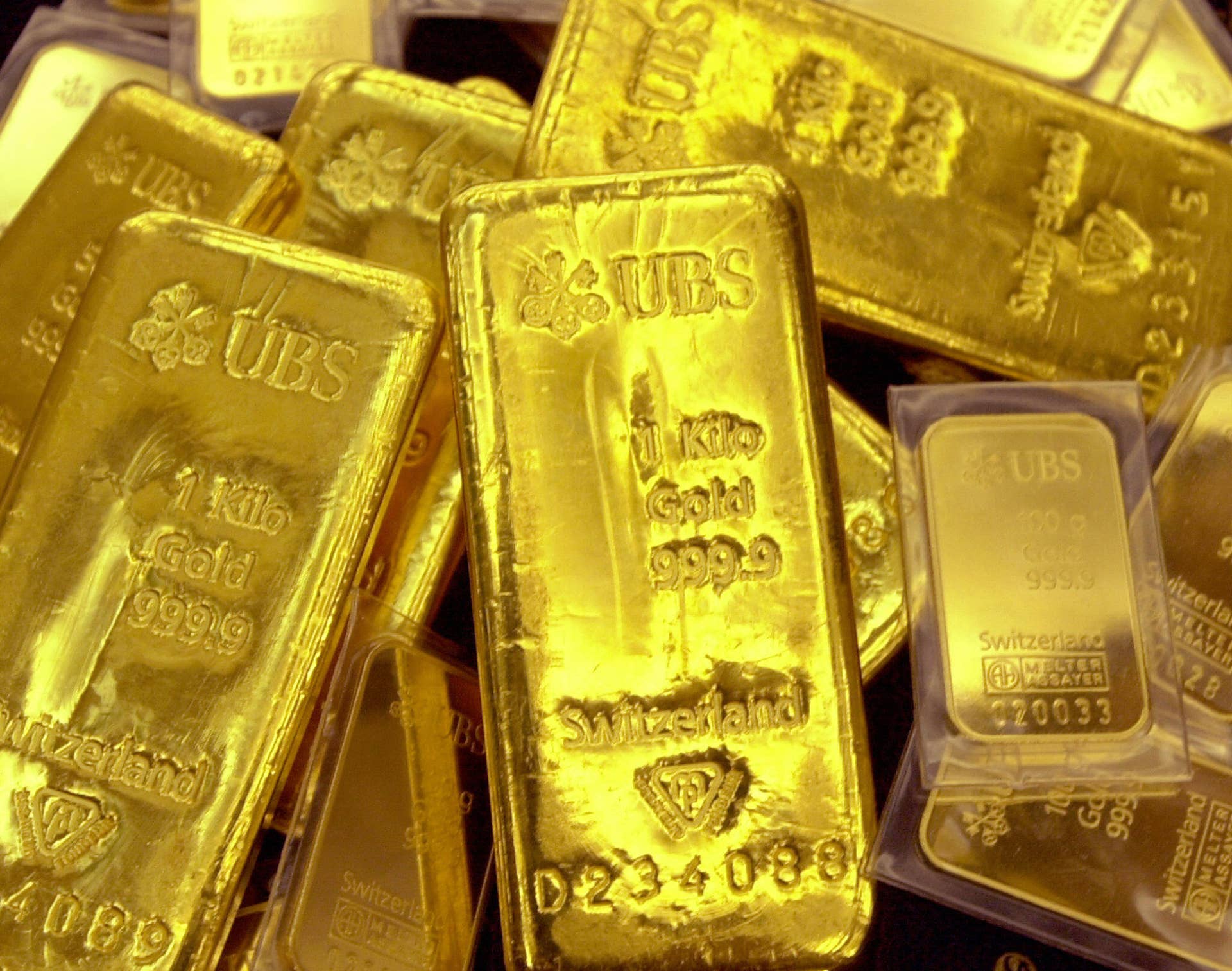
- Gold plunges, but UBS isn’t budging on its price target
- Scott Bessent just opened the door to a major gold comeback
- Gold prices break $4,000 as investors brace for crucial test
Across Wall Street, however, major banks continued to slash price targets in November as sticky inflation revived Fed rate-hike bets.
Goldman Sachs slashed its end-2026 forecast from $4,650 to $4,150 on Nov. 5 and lowered its year-end 2027 target twice, from $5,400 to $4,800, then to $4,650, expecting Fed hikes in December and March 2027.
Echoing Hansen’s exact fear, Goldman warns that a 300-tonne ETF liquidation would pull its 2027 target down to $4,265. Moreover, UBS trimmed its end-2026 target to $4,500 while keeping $5,000 for end-2027.
Most banks still see 27% to 39% upside from $3,600, leaving Hansen’s $6,000 ceiling as the bullish outlier, underscoring how much work needs to happen for the target to be reached.
3 signals gold investors should track before buying the dip
For everyday investors, Hansen’s analysis points to a disciplined playbook that’s likely to beat guessing an exact bottom.
First, the Nov. 23 bounce above $3,600 should be taken as a technical breather, not an all-clear. When bullion trades 18% below its 200-day moving average, violent snapback rallies are part and parcel, and chasing them during a funding squeeze whipsaws portfolios.
Second, monitor three concrete market tells instead of daily noise.
These include weekly gold ETF holdings (watching whether global tonnage breaks meaningfully below 3,140 tonnes), the Bloomberg Dollar Spot Index cooling off from its strongest levels since April 2025, and stabilization in mega-cap tech stocks so margin-call selling stops spilling into metals.
In addition, it would be prudent to avoid borrowing to invest in gold.
Mining stocks can still suffer when share prices fall and diesel gets expensive. Physical gold or regular gold ETFs might be a lot simpler. Hansen says central-bank buying cannot prevent sudden price drops.
Related: Nvidia stock logs 2008-scale losing streak even as interim CEO delivers beat