Family businesses eventually hit the same awkward question: who gets the keys when the founder steps away? Most founders answer with their heart. The careful ones answer with a job description.
Warren Buffett spent decades warning about the downside of inherited wealth. He famously argued that rich parents should leave their kids enough to do anything, but not so much that they could do nothing, he told Fortune in 1986.
So when the Oracle of Omaha began stepping back, you might have expected him to keep his children far from the corner office. He mostly did.
Greg Abel, not a Buffett, has been running Berkshire Hathaway (BRK.B) since Jan. 1. Abel decides what Berkshire buys, what it sells and where its cash goes.
But one seat was always reserved in the family plan. Buffett had been describing it in plain sight for 15 years, and most investors filed it away as annual-meeting trivia.
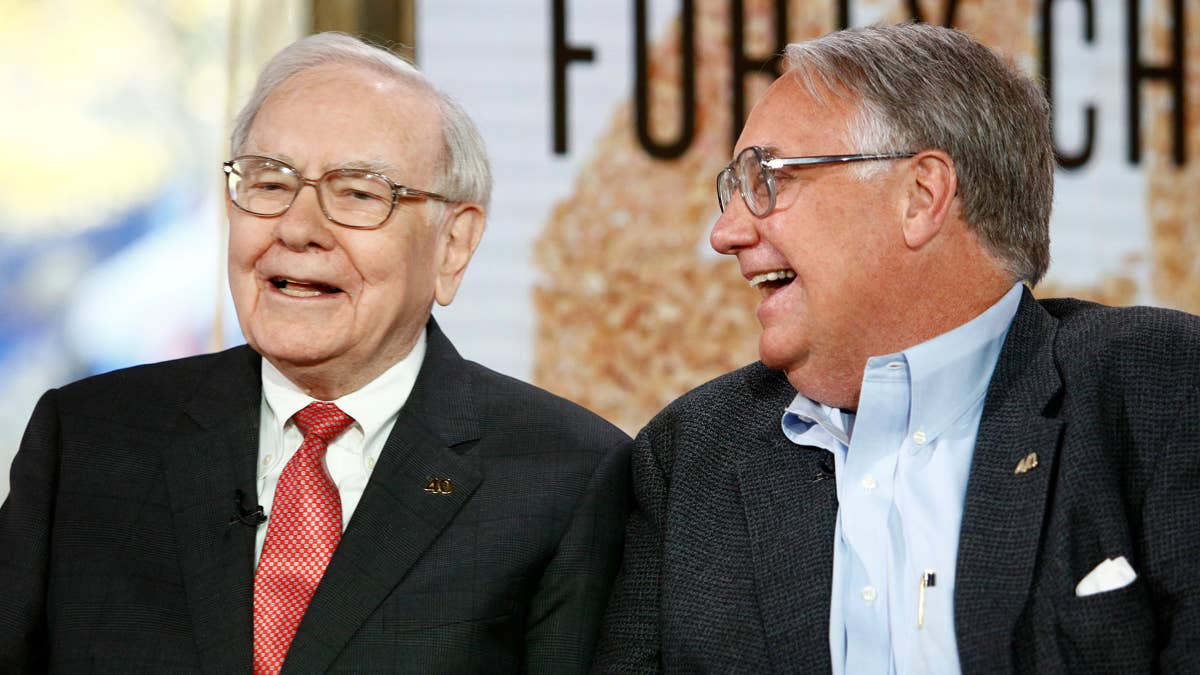
That trivia became real on Friday, Sept. 18. Buffett, 96, is now chairman emeritus, and his son Howard Buffett is Berkshire’s new chairman.
What Howard is being hired to do is stranger, and more useful to you as an investor, than the headlines suggest.
Why Berkshire Hathaway’s chairman succession took 15 years
Buffett first floated the idea during a 2011 interview with CBS’ “60 Minutes.” He worried that a future leader might use Berkshire “as their own sandbox in some way,” reported Business Insurance.
At the time, Howard was a Nebraska farmer and longtime director, and he was pitched as an extra layer of protection against that “sandbox” risk. He would serve as a non-executive chairman, not a CEO.
Related: Buffett’s worst deal is now an AI power play
I went back through Berkshire’s latest proxy statement to see how Howard Buffett’s résumé reads today. Howard is 71, has run the Howard G. Buffett Foundation since 1999, and served as sheriff of Macon County, Ill., from 2017 to 2018, according to Berkshire’s SEC filing.
He has also sat on the boards of Coca-Cola (KO) and Archer Daniels Midland (ADM), according to the company.. That board experience matters because a chairman’s power runs through the boardroom, not the trading desk.
The handoff played out over four clear steps:
- 2011: Buffett said he wanted Howard as non-executive chairman to guard Berkshire’s values, according to Business Insurance.
- May 4, 2025: Berkshire’s board voted unanimously to make Greg Abel CEO effective Jan. 1, 2026, according to a company statement filed with the SEC.
- Jan. 1, 2026: Abel took over as CEO while Buffett kept the chairman title, according to the same company statement.
- Sept. 18, 2026: Berkshire named Buffett chairman emeritus and elected Howard chairman, according to a company statement.
What Howard Buffett’s Berkshire chairman role actually covers
Howard gets the title but not the checkbook. Unlike his father, he will not hold a management role, and his main responsibility is preserving Berkshire’s culture, reported Al Jazeera, citing AP and Reuters.
In Buffett’s most revealing line in his letter to shareholders, he asked investors to think of Howard as “a[n] [insurance] policy the shareholders own and hope never to claim against,” according to Berkshire.
More Warren Buffett:
- Warren Buffett’s favorite market signal just hit a historic extreme
- Abel reversed Buffett’s two biggest convictions in six months
- Berkshire CEO explains Buffett’s surprise AI stock bet
In plain English, an insurance policy pays out only when something goes wrong. That could possibly be a future CEO chasing empire-building deals or forgetting just who owns the company.
Howard has described the company’s culture in simple terms. He said Berkshire should keep things simple, treat people fairly, respect managers and shareholders, and deliver bad news early, he told the Wall Street Journal in January 2025, as Al Jazeera reported.
None of that shows up in an earnings report. Buffett ranked Berkshire’s culture and values above anything on its balance sheet, according to his letter to shareholders.
Abel sounded like a CEO who welcomes the guardrail. He said Buffett gave him “the latitude to lead in a manner consistent with Berkshire’s culture and values,” according to CNBC.
Berkshire stock’s Buffett premium was already fading
The guardrail matters because the market has already stopped paying extra for Buffett’s name. For years, investors valued Berkshire shares above what the underlying businesses alone seemed to justify.
Berkshire’s price-to-book ratio has slipped from about 1.62 to 1.53 since Buffett announced his CEO exit, according to London Stock Exchange Group (LSEG) data cited by Reuters. Through Thursday, Sept. 17, the stock trailed the S&P 500 by about 11 percentage points in 2026, Reuters reported.
“You had a company led by a famed value investor, and now you don’t,” said Cathy Seifert, an analyst at CFRA Research, according to Reuters.
I ran the longer-term numbers, and they are sobering. Berkshire has beaten the S&P 500 by nearly 10 percentage points since 1965 but has lagged the index by roughly half a point over the last decade, according to Axios.
If 2026 ends this way, it would mark the fifth year in the last 10 that Berkshire trailed the benchmark, Axios reported.
Not everyone reads the handoff as a warning sign. The move “feels more like the completion of a carefully planned succession,” said Brian Jacobsen, chief economic strategist at Annex Wealth Management, as Al Jazeera reported.
What Berkshire’s new chairman means for your portfolio
If you own an S&P 500 index fund, you already own a slice of Berkshire. This news touches your retirement account even if you have never bought a single share directly.
Berkshire also reaches into your everyday budget. Its businesses range from Geico car insurance to the BNSF railroad and Dairy Queen, Al Jazeera reported.
The key detail in my analysis is that Friday, Sept. 18’s news changed who guards the culture. It did not change who spends the money.
Abel stepped up buybacks to $4.5 billion in the second quarter, CNBC reported. Operating profit rose 16% to $12.98 billion in that quarter, according to Reuters.
That puts the spotlight on Abel’s next big capital-allocation calls. Seifert argued that it now falls to him to calm investor worries about how Berkshire deploys its money, according to Reuters.
For you, that means judging Berkshire on its numbers rather than on nostalgia. Watch the buyback pace, the cash pile, and any large acquisition over the next few quarters.
Buffett’s last structural move builds a tripwire for the day someone tries to turn a $1 trillion company into a personal sandbox. The best outcome for Howard, and for your portfolio, is a quiet tenure in which nobody ever has to file the claim.
Related: Warren Buffett sends a strong warning to stock market investors