Warren Buffett spent decades telling investors he did not understand technology well enough to own it. Then he bought Apple. Then he tripled down on a search giant that has spent the past two years convincing Wall Street that AI makes it stronger, not weaker.
On June 1, Berkshire Hathaway made that bet $10 billion bigger. And the way the deal was structured tells you this was not a casual purchase.
What Berkshire agreed to buy and the exact terms of the private placement
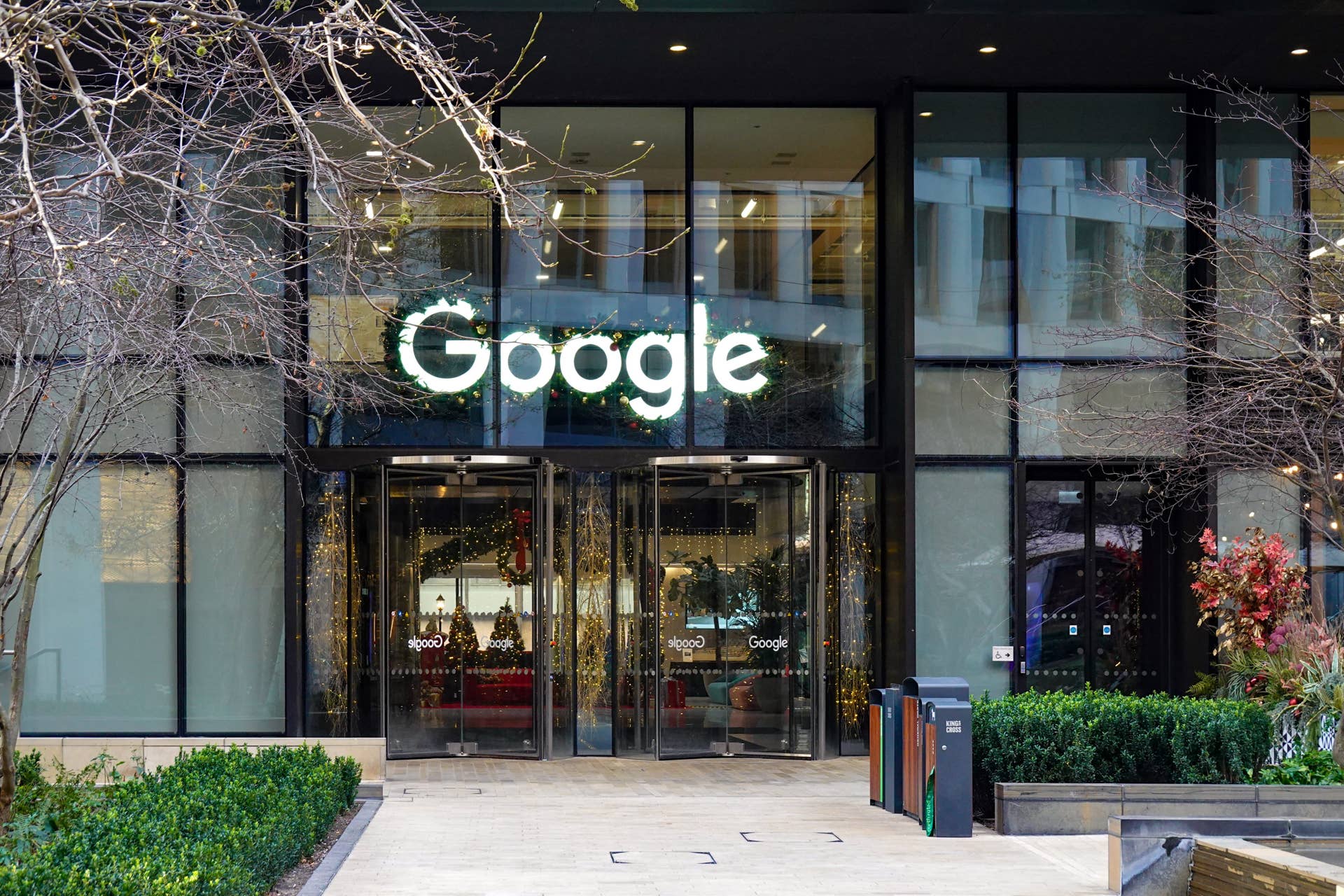
Berkshire Hathaway (BRK.B) agreed on June 1 to invest $10 billion in Alphabet (GOOGL) through a private placement, purchasing $5 billion of Class A shares at $351.81 per share and $5 billion of Class C shares at $348.20 per share, according to CNBC. Goldman Sachs acted as placement agent for the transaction.
The deal is part of a broader $80 billion equity raise Alphabet announced the same day.
It breaks down into three parts: $30 billion in underwritten public offerings, including $15 billion in mandatory convertible preferred stock and $15 billion in common and capital stock; a $40 billion at-the-market program expected to launch in Q3 2026; and the $10 billion Berkshire private deal, according to Bloomberg.
Goldman Sachs, JPMorgan Chase, and Morgan Stanley are joint book-running managers for the underwritten offerings.
Alphabet said proceeds will fund capital expenditures to scale AI infrastructure and global compute amid what it described as “unprecedented customer demand.”
“The company is experiencing strong demand for its AI solutions and services from enterprises and consumers, at levels that are exceeding the company’s available supply,” according to CNBC.
How big Berkshire’s Alphabet position has become
Monday’s deal did not come out of nowhere. Berkshire has been building its Alphabet position since the third quarter of 2025, when it first disclosed a $4.3 billion stake , one of its most significant technology investments at the time.
By Q1 2026, Berkshire had more than tripled its holding to roughly $16.6 billion, making Alphabet one of its largest common stock positions, according to Axios.
The $10 billion private placement brings Berkshire’s total Alphabet investment to approximately $26.6 billion, according to CNBC.
That makes it one of Berkshire’s largest equity positions alongside Apple and American Express.
Nguyen/Getty Images
What Greg Abel’s Alphabet conviction says about Berkshire’s direction
This is not the Berkshire that spent decades avoiding technology. Under Warren Buffett, the conglomerate famously steered clear of most tech stocks on the grounds that their competitive advantages were too difficult to assess over long time horizons.
The Apple investment eventually changed that narrative. Alphabet is deepening it.
Abel’s decision to participate in a dilutive equity offering at a premium reflects a specific bet: that Alphabet’s AI capital expenditure will generate returns that justify the cost of issuing new shares.
Bill Stone, Chief Investment Officer at Glenview Trust and a Berkshire shareholder, said the purchase “suggests Berkshire CEO Greg Abel believes Alphabet will earn a reasonable return on its AI capex spending even with the dilution from issuing new shares,” according to Bloomberg.
That is not a trivial statement. Alphabet is guiding $180-190 billion in capital expenditure for 2026, roughly double its 2025 spending of $91.4 billion.
Participating in the equity raise means Berkshire is explicitly buying into the math that says those billions will compound into durable returns rather than inflate costs.
Key figures from Berkshire’s June 1 Alphabet private placement:
- Deal terms: $5 billion in Class A shares at $351.81 per share; $5 billion in Class C shares at $348.20 per share; Goldman Sachs placement agent, according to CNBC
- Berkshire’s total Alphabet stake: approximately $26.6 billion after the June 1 deal; position built since Q3 2025 when Berkshire first disclosed a $4.3 billion investment, according to Axios
- Alphabet’s $80 billion raise: $30 billion underwritten offerings; $40 billion at-the-market program from Q3 2026; $10 billion Berkshire private placement; Goldman Sachs, JPMorgan, Morgan Stanley joint book-running managers, according to Bloomberg
- Alphabet’s AI rationale: “experiencing strong demand for its AI solutions and services from enterprises and consumers, at levels that are exceeding the company’s available supply,” according to the official Alphabet announcement
- Capex context: Alphabet guiding $180-190 billion in capex for 2026, up from $91.4 billion in 2025; Google Cloud backlog above $460 billion, nearly double the prior quarter, CNBC confirmed
- Berkshire context: cash pile approaching $400 billion; also acquired Taylor Morrison for $8.5 billion in May; Abel deploying capital into AI infrastructure and US housing in first months as CEO, according to CNBC
Why Alphabet’s AI story attracted Berkshire-style capital
Berkshire does not typically buy into equity raises. The firm’s preference has always been to acquire whole businesses or buy stakes in the open market at prices it controls.
Participating in a private placement at a fixed price, in a dilutive offering, is a different kind of transaction , one that requires conviction about the long-term value of what is being funded rather than short-term price appreciation.
Alphabet fits the criteria Berkshire has applied to its best investments.
The company generates enormous free cash flow, holds a dominant position in search advertising that has proven durable across multiple technological shifts, and benefits from a sprawling ecosystem spanning YouTube, Android, Cloud, and now AI products used by hundreds of millions of people. Those characteristics do not disappear during an AI capex cycle.
What Berkshire appears to believe , and what the $26.6 billion cumulative stake now makes explicit , is that Alphabet’s AI infrastructure investments are not a threat to those characteristics.
They are an extension of them. For investors still debating whether Alphabet’s capex commitments will hurt returns or strengthen its competitive position, the identity of its newest large-scale buyer is itself an answer worth weighing.
Related: Morgan Stanley resets Alphabet stock forecast on Waymo growth