While running a fast-food giant might seem easy, few legacy chains have stood the test of time like McDonald’s (founded 1940) or KFC (founded 1952). Survival requires constant adaptation.
According to Placer.ai, Q1 2026 U.S. quick-service restaurant (QSR) traffic grew just 0.1% year-over-year as “increasingly cautious consumers pulled back on dining out.”
Consumers now look beyond price to overall value, evaluating “food quality, speed, consistency, convenience, digital ordering, atmosphere, and whether the brand still feels relevant,” says Robin Gagnon, CEO of We Sell Restaurants.
Unfortunately, many chains are falling short. Joel Libava, head of Franchise Selection Specialists, told The Food Institute that brands must keep prices reasonable while delivering consistent quality and fast service:
“First off, in a lot of cases, food quality is inconsistent and can sometimes be below-average. Secondly, seemingly permanent employee shortages are increasing time for customers to get their food. Thirdly, fast-food is barely affordable anymore. It costs a family of four over $35 to eat at McDonald’s. Combined, these things can’t go on. And it’s why fast-food businesses are closing.”
According to The Food Institute, in 2026, the major QSR chains in the most trouble include:
- Wendy’s
- Carl’s Jr. and Hardee’s
- Papa Johns
- Jack in the Box
- Popeyes
However, despite the challenges and frequent restaurant closures, larger chains are not necessarily struggling. Sometimes restaurant optimization is just part of the strategy to invest in markets with better growth potential.
That brings us to the recent news about KFC.
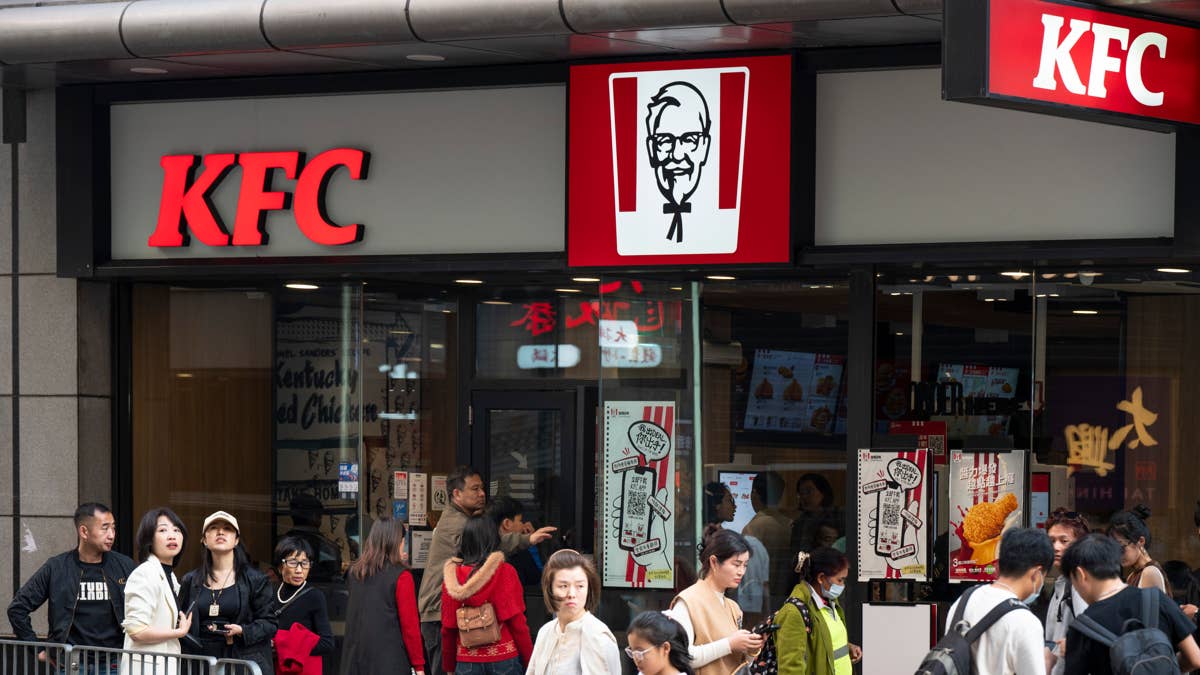
KFC closes 207 restaurants across United States in 15 months
A recent analysis by local AI search visibility platform Local Falcon revealed that the fast food giant has closed at least 312 KFC restaurants from July 15, 2025, to July 6, 2026. The analysis used KFC’s public store locator and verified each removed listing against Google Maps, suggesting that the company reduced its US physical footprint by 7.64% in that period.
To verify these closure numbers I’ve conducted my own research analyzing official KFC’s store locator numbers, official KFC’s corporate reports and ScrapeHero’s location reports. Here’s what I found.
On July 14, 2026, KFC’s store locator revealed that the fast food giant has 3,784 locations in the United States. Using Wayback Machine, I discovered that on July 14, 2025, KFC’s store locator was showing 4,089 active locations, confirming a reduction of 305 restaurants in one year.
The data fairly aligns with Local Falcon’s numbers, as the latter study used dates from July 15, 2025, till July 6, 2026, which could be enough for the difference of seven restaurants.
However, when looking at ScrapeHero’s data, we get different results, for a period of another 12 months (from May 2025 till May 2026). Based on ScrapeHero’s database, on May 12, 2026 KFC had 3,943 locations across the country, versus 4,110 it had on May 21, 2025.
Relying on ScrapeHero’s data from May 2025 till May 2026, KFC saw a net decline of 167 restaurants. A significantly lower number than 312 locations, even if we account for the different period by two months.
Moreover, based on Yum! Brands (KFC’s parent company) official report on the store count for the end of 2025, the company had closed 161 restaurants in the United States in 2025. Its latest report on the first quarter of 2026, reveals another 46 restaurant closures, suggesting that KFC closed a total of 207 restaurants from January 2025 till March 31, 2026.
The numbers suggest around 5% decline over the period of 15 months.
Moreover, the company net restaurant decline (when counting the company’s openings as well) was 187.
Google Maps doesn’t show relocations, it just applies a “Permanently Closed” label
So, how come that Google Maps analysis by Local Falcon, shows significantly higher number of closures? There are a few possible reasons for this discrepancy and one of them concerns restaurant relocations.
More precisely, digital marketing and local listing agency Kraus Marketing explains how Google’s internal rules often place the “Permanently Closed” label on operating businesses that have simply changed addresses.
“When a business switches locations, Google will insist that they update their current address in their Google My Business dashboard. But what many businesses don’t know is that they often have duplicate Google listings without realizing it after adding a new address. Businesses that don’t claim their updated listings in Google My Business will end up with their listing marked as “Permanently Closed,” as Google’s rules say that they will “close” a listing when a business moves,” writes Kraus Marketing.
Furthermore, data collection platform Bright Data notes that automated web scrapers are vulnerable to “temporal inconsistencies,” often pulling “cached error pages that don’t reflect current website state.
Bottom line: Yum! Brands’ own filings confirm 207 U.S. closures from January 2025 through March 2026. The larger numbers from public store-locator data are measuring something different: total visible locations, not confirmed permanent closures, over a different time window.
Related: 44-year-old mall retailer quietly closes 28 stores
Why has KFC been closing restaurants across the United States
When analyzing KFC’s recent closure it is important to remember that a large number of those restaurants are franchisee owned. Moreover, in 2025 Yum! Brands hasn’t closed a single company-owned location, while it has opened three new ones, and acquired 7, according to the giant’s official report.
What’s particularly interesting is that, at the same time KFC closed 161 restaurants across the United States, internationally it has added 2,971 locations. The numbers suggest that the company is focusing on expanding in other countries.
Q1 2026 report reveals another 643 opening in markets outside of the United States.
“Many people from the United States that just know the brand in the U.S. don’t really appreciate how big the brand is across the world,” Scott Mezvinsky, global CEO of Yum! Brands’ KFC Division, told Nation’s Restaurant News in February 2026.
“The U.S. obviously was founded on chicken on the bone specifically, whereas in Europe, I don’t think the consumers ever really knew what fried chicken on the bone was,” Mezvinsky said. “So the brand was able to develop with … the best tasting chicken, but in a more modern way. I think if we could do it over again, go back 20 years in the U.S., we would have been evolving into the more modern formats earlier than we did.”
When a major fast food restaurant chain closes hundreds of locations, it is not necessarily a sign of failure or retreat. Instead, it is common for such large chains to deal with underperforming locations to improve profit margins.
Vice President of Insights and Knowledge at Black Box Intelligence, Victor Fernandez, recently explained the “silver lining” of closing underperforming sites:
“The silver lining here is that a leaner portfolio often becomes a stronger one. When a brand stops subsidizing its bottom 10% of units, it can reallocate capital, management attention, and marketing spend to the units with the highest growth potential, Fernandez told Nation’s Restaurant News in March 2026.
What’s next for KFC?
In the full year 2025, Yum! Brands reported KFC had $36.4 billion in sales, compared to $34.4 billion in 2024.
While sales seem to be growing, it is important to note that only 13% of those sales came from the United States, versus 27% that came from China, and 12% from Europe. Moreover, United States system sales actually declined 3% compared to 2024, while at the same time its sales grew year over year across all the other markets:
- China: +6%
- Europe: +5%
Asia: +9% - Latin America: +12%
- United Kingdom: +7%
- Australia: +3%
- Middle East / Turkey / North Africa: +8%
- Africa: +10%
- Canada: +7%
- India: +9%
“KFC may have a bumpy road back to dominance in the U.S., but one thing is for sure: The strength of the KFC brand around the world ensures it’s never too far from a great idea that could jumpstart sales,” writes Nation’s Restaurant News.
Moreover, Mezvinsky suggested that though the company owns around 34,000 restaurants they “can get to 75,000 restaurants,” reaffirming the hypothesis that the brand is not backing down, rather it is shifting its focus and expanding across more profitable markets.
Related: We compared Walmart’s new prices to Target and Kroger