Ford’s large SUV lineup — the Bronco, Explorer, and Expedition — achieved its best first-half sales in 25 years, demonstrating strong demand for the automaker’s high-margin vehicles.
These three models generate higher margins than small cars due to premium pricing, high-end trim levels, and profitable packages. The success of this lineup is therefore particularly important for Ford’s overall earnings.
The timing couldn’t be better. As the company revises its electrification strategy, its traditional lineup of large SUVs becomes an increasingly critical source of financial stability.
Large Ford SUVs drive growth
Combined sales of the Ford (F) Bronco, Explorer, and Expedition increased by 10.1% in the first half of 2026 in the United States. The Explorer led the way with 126,925 sales, followed by the Bronco (76,936) and Expedition (40,411).
The Bronco set sales records for the first half and second quarter, while also outselling its key competitor, the Jeep Wrangler, in Q2.
More Automotive:
- Ford is betting a new battery strategy will make EVs profitable
- Ford faces another setback involving its most important vehicle
- American drivers just sent Detroit a clear message
“The company’s focus on high-margin SUVs — Expedition, Explorer, and Bronco — sustained retail share during the planned phase-out of the Ford Escape and Lincoln Corsair,” said Ford. “This transition paves the way for Ford’s all-new, affordable midsize electric pickup built on its Universal Electric Vehicle platform.”
Total Q2 sales declined 10% to 549,200 vehicles, which Ford partly attributed to the phase-out of smaller models like the Ford Escape and Lincoln Corsair. Supplier issues for the best-selling F-Series pickup also dragged down overall sales, reports CNBC.
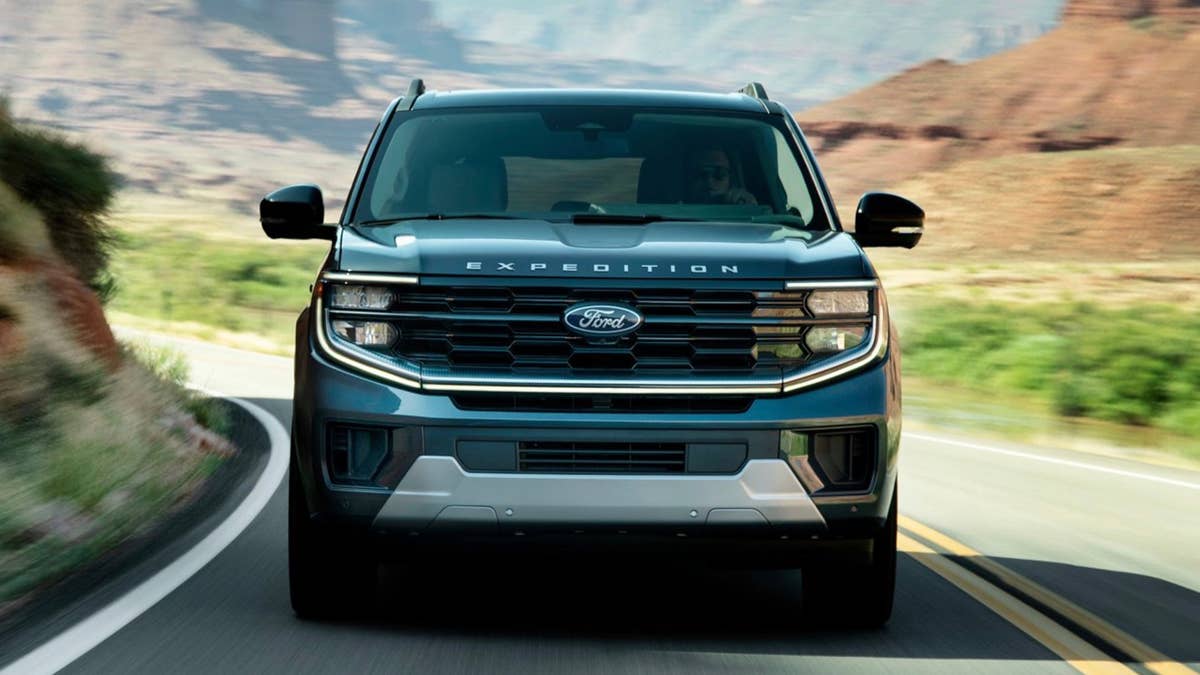
The large SUVs are not niche products. Rather, they’re some of the brand’s main revenue generators alongside its large pickup range.
Ford
Why large SUVs matter for Ford
Ford’s bigger SUVs typically see higher average transaction prices. This pattern is bolstered by the availability of premium trims and a range of off-roading accessories; it’s possible to spend over $80,000 on a top Bronco.
For Ford, a single sale of such a model can be more profitable than selling several budget vehicles.
Related: Jim Farley uses Japanese management tool to beat $5 billion quality issue
Ford’s SUV range is particularly crucial, as this has been its focus over the last decade. It no longer sells sedans, with lower-priced models like the Focus and Fiesta previously discontinued in the United States.
Selling SUVs isn’t only about volume for the Blue Oval. It’s about protecting margins.
These SUVs are funding Ford’s future
Even an automaker predominantly known for large, gas-powered SUVs and trucks needs to prepare for an electrified future.
Ford has restructured its EV business substantially after heavy losses tied to vehicles such as the F-150 Lightning, a recently discontinued electric pickup, Autoblog noted.
The company has a few hybrids on sale, but needs to increase its offering in this category.
One major strategic move will see Ford produce its own lithium-iron phosphate (LFP) batteries in the U.S., which will be used in a new generation of EVs, according to Autoblog.
This will help Ford work toward a much more profitable EV business.
As these electrification plans unfold, larger, gas-powered SUVs continue generating healthy cash flow. These profits will help Ford fund continued EV development, new software, and production facility upgrades.
As long as strong sales of large SUVs and trucks continue, it eases pressure on Ford’s electrification transition.
Ford’s balancing act isn’t over yet
Ford’s latest SUV sales point to sustained consumer demand, healthy margins, and the continued strength of the brand in America.
At the same time, relying too heavily on larger gas models does expose Ford to fluctuating fuel prices, economic slowdowns, and competitors with a more diverse product mix.
The reality is that Ford must walk the tightrope between catering to its traditional clientele’s current desire for gas-powered models, while also preparing for an electrified future.
Neglecting either segment isn’t an option. Rather, today’s Ford SUVs are invaluable in funding tomorrow’s EVs.
If Ford can balance these two businesses successfully, it could emerge from the industry’s electrification transition with the same competitive edge it enjoys with today’s trucks and big SUVs.
Related: Ford recognized for addressing stubborn quality issue