Oracle just proved that even a company sitting on one of the largest sales backlogs in tech history is not immune to hard choices about headcount. Employees who thought the worst of the cuts were behind them are finding out otherwise.
The pattern is becoming familiar at this point. Oracle keeps pouring tens of billions of dollars into AI data centers, and every few months, another wave of job cuts follows close behind to help pay for it.
Oracle has started a new round of layoffs
The termination notices landed the way they usually do at Oracle now, short, formal, and final. “After careful consideration of Oracle’s current business needs, we have made the decision to eliminate your role as part of a broader organizational change,” one email reviewed by the outlet stated. “As a result, today is your last working day,” as reported by Business Insider.
The cuts began on September 14, matching what a source with knowledge of the matter had expected, and were confirmed by three affected employees along with a copy of the notification email. An Oracle spokesperson did not immediately respond to requests for comment on the new round.
More Layoffs:
- Samsung cuts jobs as it shifts U.S. headquarters
- Another popular soda giant closes warehouse operation, cuts 184 jobs
- Meta layoffs take disturbing turn in new lawsuit
This is not the company’s first time delivering this kind of news at scale. Oracle has confirmed mass layoffs to reporters before, including an earlier round this year that also came as the company dealt with a falling stock price tied to its heavy AI infrastructure spending, according to CNBC.
Word spread quickly once notifications went out. Posts began appearing on LinkedIn, Reddit and Blind from people claiming to have been affected by the latest cuts, repeating a now familiar ritual that has accompanied nearly every round of Oracle layoffs this year.
A year of cuts backed by a bigger AI bet
The numbers behind this year’s reductions are stark. Oracle’s headcount fell from about 162,000 to 141,000 over its 2026 fiscal year, a 13% reduction, while severance and other restructuring costs jumped to $1.8 billion from $374 million the year before. At the same time, the company’s remaining performance obligations, a measure of future contracted revenue, reached $553 billion for the year, TheStreet reported.
That spending has piled up fast on the balance sheet. Oracle issued $43 billion of senior notes in fiscal 2026 as its lease obligations doubled alongside its data-center expansion, pushing total liabilities from $147.4 billion to $218.7 billion in a single year. Free cash flow for fiscal 2026 came in at negative $23.7 billion. The company maintained its full-year capital expenditure forecast for fiscal 2027 at $90 billion to $95 billion, CNBC reported.
To help finance its massive infrastructure buildout, Oracle raised $43 billion in debt and another $5 billion through stock sales during fiscal 2026, and expects to raise roughly $40 billion more through a mix of debt and equity in the current fiscal year.
Wall Street’s mixed verdict on Oracle
The stock has taken a beating over the pattern of borrowing and cutting. Oracle shares fell 19% in a single week in late June, the steepest weekly drop since the dot-com collapse of 2001, even though roughly 71% of analysts covering the stock still rated it a buy, CNBC reported.
Some of that unease has crept into credit markets. Oracle’s rising debt load and negative free cash flow have contributed to S&P Global’s downgrade of the company’s credit, rating it one step above junk status. A downgrade that was a warning sign for investors watching the balance sheet rather than just the revenue headlines.
Not every analyst treats the layoffs as a red flag, though. Barclays argued the cuts function mainly as cost discipline the market already expects and kept an overweight rating on the stock. Bank of America pointed to Oracle’s $638 billion cloud backlog as the eventual payoff, noting that roughly 12% of that backlog is due within a year and another 34% over the following two to three years, according to TheStreet.
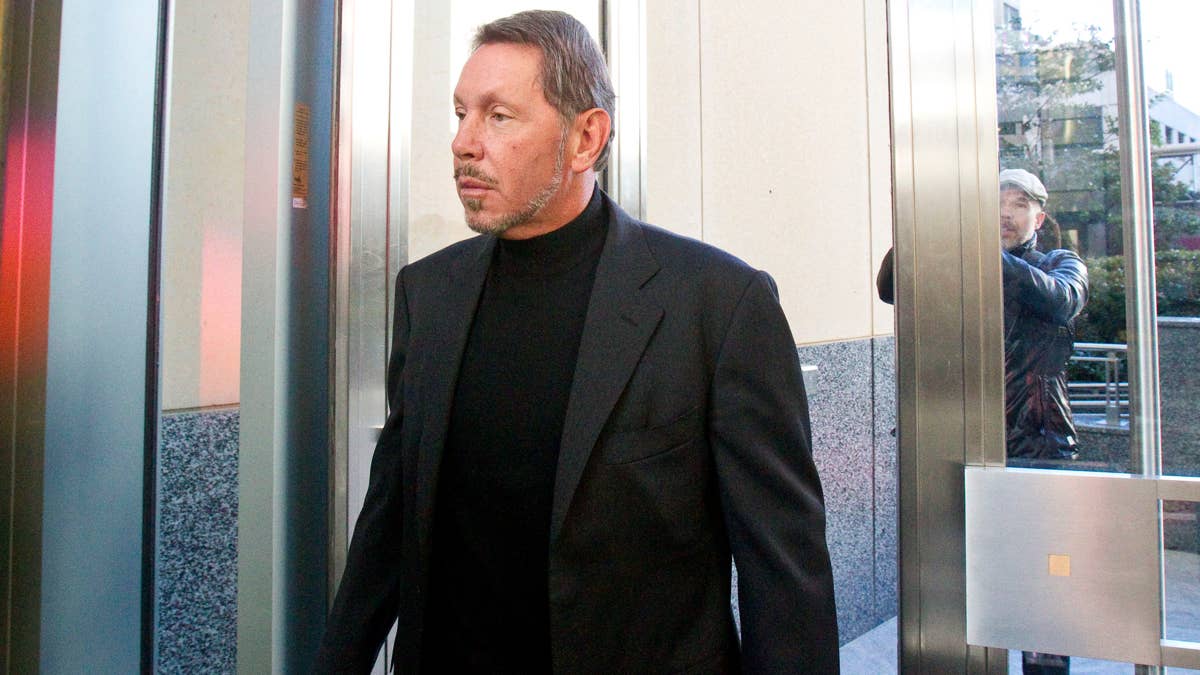
A separate concern has followed the stock’s swings. Oracle co-founder Larry Ellison has pledged hundreds of millions of Oracle shares as loan collateral, creating an overhang that grows more sensitive every time the stock drops further.
What comes next for Oracle
Oracle’s own numbers suggest the AI bet still has real demand behind it. The company has secured more than 10 gigawatts of power for its data center capacity. TD Cowen estimates the recent round of cuts totals between 20,000 and 30,000 positions as Oracle reallocates resources toward its highest priority growth areas for data-center projects, according to CNBC.
When Oracle’s earlier 2026 round of cuts went public, the stock closed roughly 6% higher that same day. Shares were still down about 29% year-to-date at the time. The market has seen enough of these announcements to know how to price them.
The backlog is real. $553 billion in remaining performance obligations is not a small number. The question is whether Oracle can turn contracted revenue into actual cash before the debt load becomes the bigger story. Every quarter that answer gets harder to postpone.
Employees do not have the luxury of waiting on that answer. For them, the email already came.