While the name Mercer International may not mean something to you, the company’s $1.6 billion Chapter 11 bankruptcy hits many Americans in their homes and in their bathrooms.
Like most Americans, I rarely think about where the lumber that went into my house came from, and I know very little about the brands that make toilet paper.
When you can’t find these products, however, as we learned during the Covid pandemic when toilet paper became scarce, you think a lot more about where they come from.
During those days, for example, I learned that we didn’t have an actual shortage of toilet paper. Instead, we had the wrong kinds of toilet paper because a percentage of all the toilet paper that gets manufactured goes to office use.
Even during the darkest times, when I had resorted to ordering toilet paper brands I had never heard of on Amazon, most of which never came, I could have walked into Staples or Office Depot and bought one of those giant, 1-ply rolls that everyone has at work.
It was a period that made many people micro-hoarders when it came to toilet paper, and now, it’s worth considering what will happen now that Mercer International, one of the largest suppliers of the pulp that goes into toilet paper in the world, is going through a Chapter 11 bankruptcy.
Mercer International enters Chapter 11 bankruptcy
There’s good news in Mercer’s statement about its Chapter 11 bankruptcy filing. The company has entered Chapter 11 as part of what it calls “the next phase of its previously announced comprehensive recapitalization,” according to a press release.
The company said it has a restructuring support agreement with holders of more than 88% of the aggregate outstanding principal amount of its 12.875% Senior Notes due 2028 and 5.125% Senior Notes due 2029, including the members of an ad hoc group of
noteholders.
Mercer has filed a reorganization plan as part of its Chapter 11 filing. The company shared what it has planned.
- Upon emergence from the process, Mercer expects to reduce its existing senior note debt by approximately 88% and eliminate more than $100 million of annual cash interest payments.
- The recapitalization is also expected to bring approximately $400 million of new capital into the business through a fully backstopped rights offering.
Mercer has continued to operate, and all employees are being paid, according to a statement from CEO Juan Carlos Bueno.
“Throughout this process, our operations are continuing in the ordinary course,
and we remain focused on supporting our employees and working closely with our customers, suppliers and other business partners,” he said.
Chad Van Horn, managing partner of Van Horn Law Group in Fort Lauderdale, Fla., spoke to TheStreet about how a pre-packaged bankruptcy works.
“A prepackaged Chapter 11 locks in the creditors who signed. It doesn’t lock in the ones who didn’t, and it doesn’t bind the judge. Holdouts can still fight the plan at confirmation, the business can run short of cash before the plan is approved, and the whole deal rests on projections that have to hold up. A prepack shortens the road. It doesn’t guarantee you reach the end of it,” he told TheStreet.
Who will own Mercer if the plan gets approved?
Mercer is publicly traded on the Nasdaq, but said in its press release that it “expects to receive notice from Nasdaq that it has determined to suspend trading of the company’s common stock.”
Unlike many Chapter 11 bankruptcy filings, current stockholders will not be fully eliminated. Here’s how the company will be owned, according to an SEC filing.
Existing shares: Will be canceled when the plan becomes effective. Existing shareholders will receive the new securities described above instead.
Senior noteholders: Receive 91.5% of the new common stock, subject to dilution.
Senior noteholders: Will also receive 56.5% of the new convertible preferred stock, subject to dilution.
Existing shareholders: Retain an economic interest through 8.5% of the new common stock and 3.5% of the new convertible preferred stock, subject to dilution.
Backstop investors: Certain members of the ad hoc senior noteholders group are backstopping a $400 million cash rights offering of new secured notes.
Shutterstock
Here’s what Mercer makes:
While the Mercer name is not a public-facing brand, the company has four key areas of operation:
- Toilet paper, tissues, and paper towels: Mercer produces northern bleached softwood kraft (NBSK) pulp, an important ingredient in tissue products. Its long fibers provide strength and absorbency.
- Paper packaging and cardboard: Its pulp goes into paperboard, cartons, and specialty paper products used in consumer packaging.
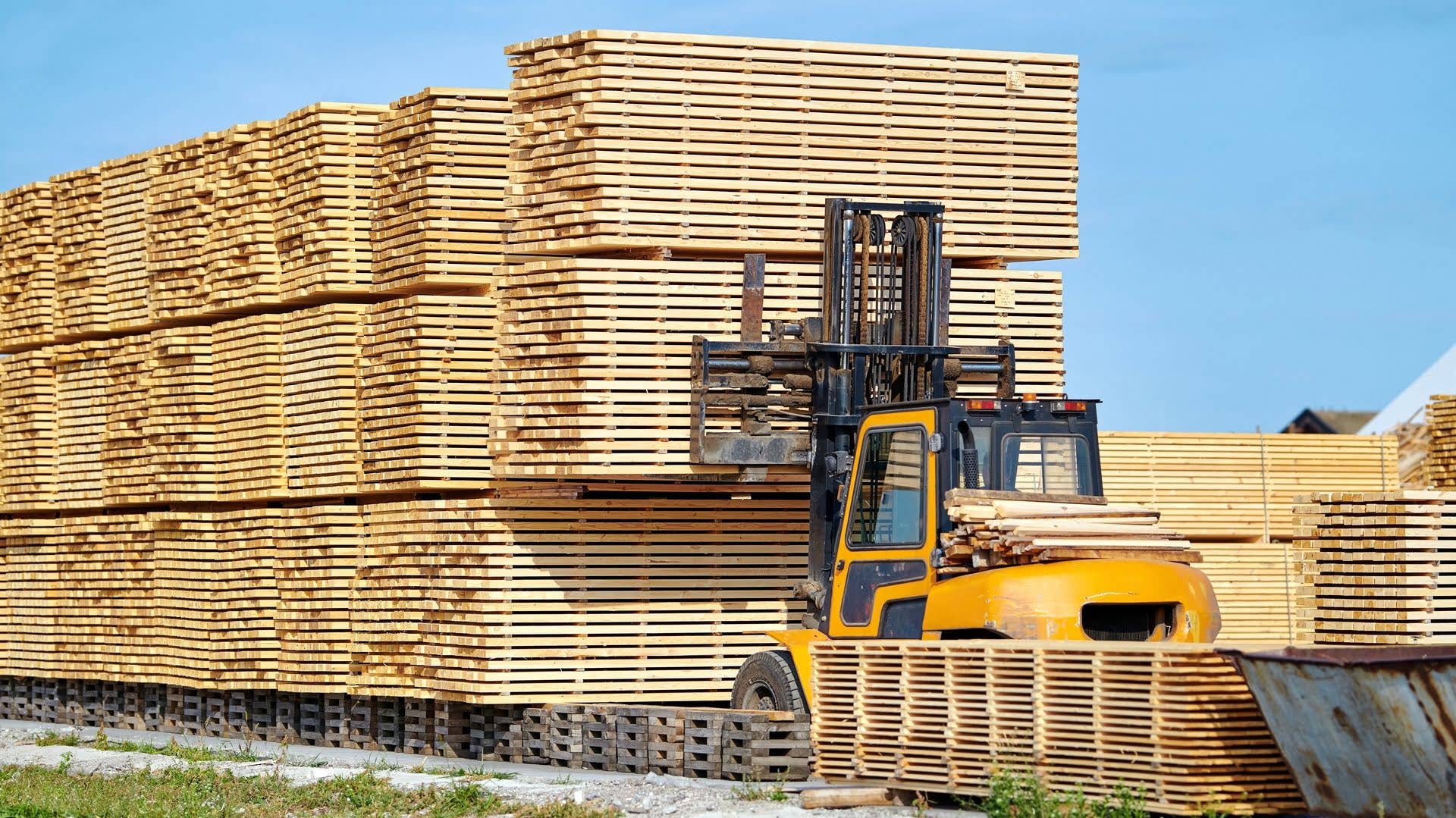
- Lumber for home construction: Mercer operates large lumber facilities supplying dimensional lumber used in residential construction and other building projects.
- Engineered wood for buildings: Mercer manufactures cross-laminated timber (CLT) and glulam products used in commercial and residential construction.
- Source: Mercer’s website
Mercer has said its operations won’t be impacted by the Chapter 11 filing.
As someone who once purchased lumber and wood planks for my family’s scaffolding business, the price of those commodities can be very volatile.
Even a hint of a supply chain issue or product shortage could send prices higher, and that would impact everything from home prices to the cost of repairing or upgrading existing houses.
Mercer International Chapter 11 at a glance
- Filing date: Nov. 9, 2026
- Court: U.S. Bankruptcy Court, Southern District of Texas, Houston Division
- Lead case number: 26-90829
- Second debtor: Mercer International (Texas) LLC, case 4:26-bk-90828
- Judge: Christopher M. Lopez
- Filing type: Prepackaged Chapter 11 reorganization
- Debtors: Mercer International Inc. and Mercer International (Texas) LLC. Texas Southern Bankruptcy Court+1
- Total funded debt at filing: Approximately $1.6 billion, according to the disclosure statement
- Debt after restructuring: Expected to fall from approximately $1.6 billion to $700 million
- Annual interest savings: Approximately $100 million
- Sources: PacerMonitor, SEC
Related: What LIV Golf’s Chapter 11 bankruptcy means for sports fans and golfers