Apple Inc. (AAPL) has been one of my favorite stocks over the years. I’ve recommended it several times over the past couple of decades – and every time, we’ve sold it for a gain. We first bought the stock in November 2004 and sold it in October 2008 for a 253% gain. Then we bought it again in October 2009 and booked a 152% gain in February 2013.
Since then, we’ve largely avoided Apple, though. The consumer electronics maker simply lacked the earnings and sales momentum we require for our portfolio.
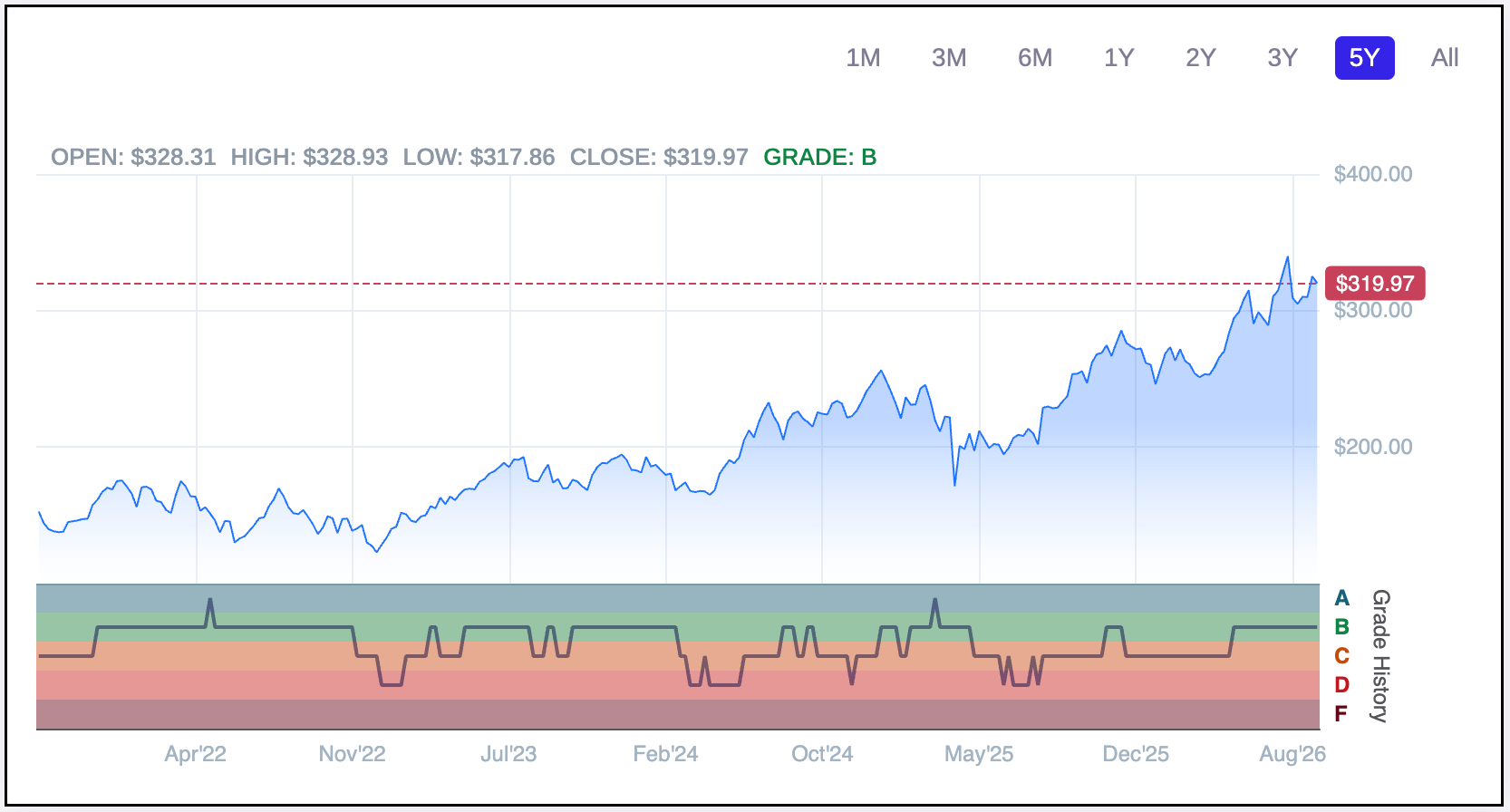
Revenue grew just 2% in fiscal 2024 and 6.4% in fiscal 2025 – solid for a company of Apple’s size, but nowhere near what we look for. My Stock Grader agreed: AAPL spent most of the past five years stuck between a C and D grade.
But that’s all about to change.
Right now, AAPL carries a B grade in Stock Grader – a real shift from where it’s spent most of the last five years. You can see that in the Grade History in the bottom section of the image below. Also note that at the end of July, the stock rose to a new high above $340.
There’s also a changing of the guard at the top. Tim Cook officially stepped down as Apple’s CEO on September 1, handing the reins to John Ternus, a 25-year Apple veteran who has spent his career as the company’s SVP of Hardware Engineering.
Cook was the operations mastermind who scaled Apple into a $4 trillion company. Ternus is a hardware guy through and through, and he’s taking over at the exact moment Apple is making its biggest hardware bet in over a decade: the iPhone Ultra.
Don’t Buy on Launch Day
All of this is expected to be a big boon for Apple. In fact, since the rumor mill started buzzing about the company’s upcoming product reveal, the analyst community has raised fiscal year 2026 earnings estimates.
The current consensus estimate calls for full-year earnings of $8.81 per share and total sales of $477.68 billion, which represents 18% annual earnings growth and 14.8% annual sales growth. That would be Apple’s best growth in years. And given how these estimates have already been raised once on foldable-iPhone buzz alone, don’t be surprised if Apple ends up beating even these fresh numbers once the actual sales data comes in.
It’s time to go back to the well for more profits, but let me be clear about one thing before investors dive in and scoop up shares.
Related: Louis Navellier delivers hot take on rising bond yields
Historically, AAPL has not reacted positively to its new product launches. In fact, the stock tends to slide lower on the day the company unveils its latest and greatest new products.
Dow Jones Market Data even reports that AAPL has declined an average of 0.7% on the company’s annual product launch day since the first iPhone was released in 2007.
Take September 2025, for example.
Apple introduced its iPhone 17 lineup, including the iPhone Air, and noted that it would not raise prices despite rising cost pressures from tariffs. This should have been celebrated by Wall Street and Apple enthusiasts, yet AAPL shares slipped 1.5%.
The reality is that new products are typically leaked before the actual event, just like they were this year. So, excitement about the new product line is generated ahead of the unveiling, and the stock tends to rally ahead of the event rather than on the day.
After that, though, AAPL tends to meander higher in the following months when the products actually hit the shelves, and there’s more clarity on demand and actual sales data.
Dow Jones Market Data shows that AAPL has rallied an average of 12% in the six months following a product launch.
I suspect this year will be no different. AAPL is a Conservative buy below $342.
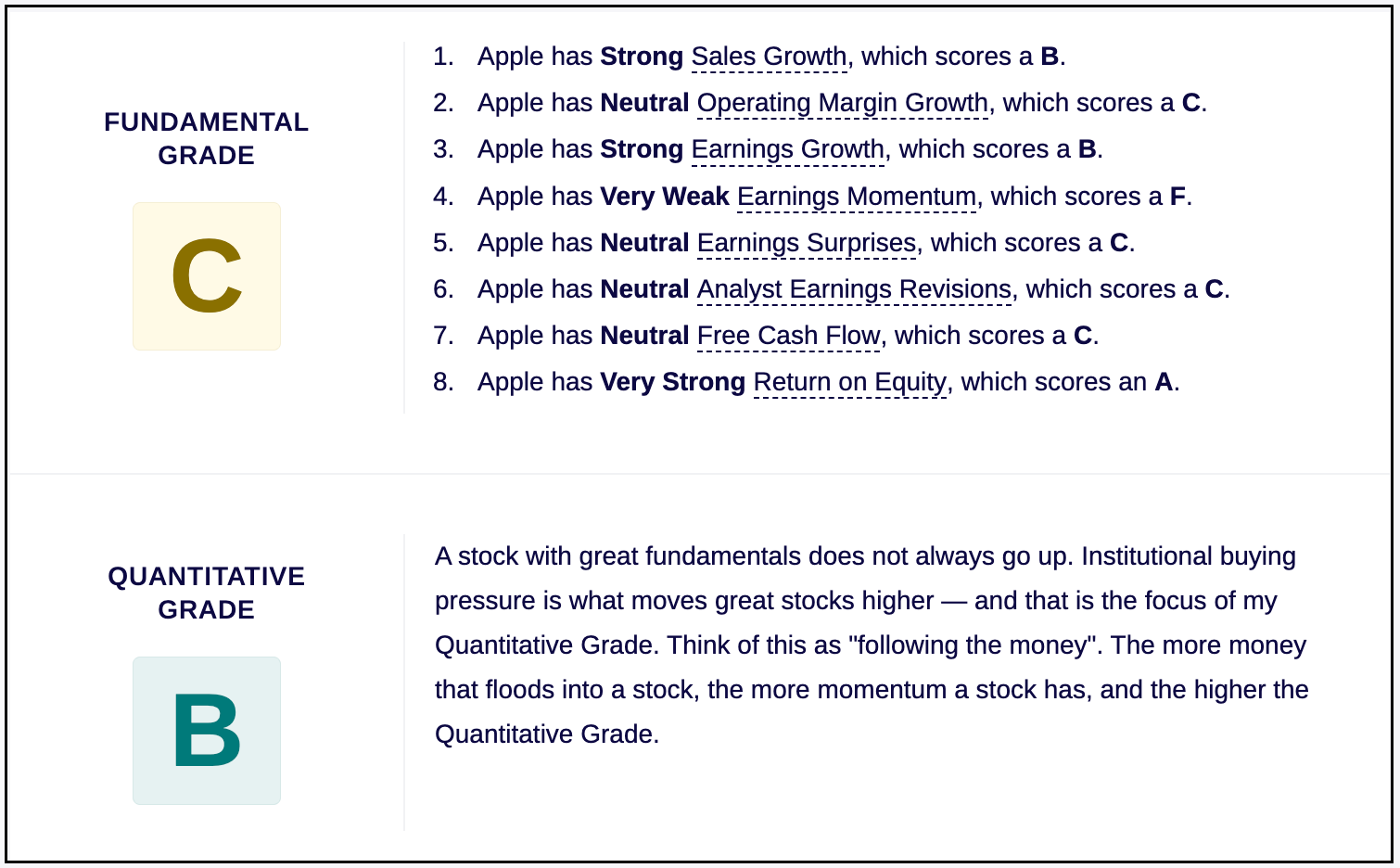
For more information about my stock grading system, click here.
Related: Apple’s new CEO faces a staggering $14 billion iPhone test