This has been a year of restructurings, with some quiet and some well-planned layoffs.
Today, a company’s growth, especially in the technology sector, does not necessarily translate into job security.
And this disconnect between revenue and consolidation is becoming harder to ignore as companies continue to invest in AI and the next phase of business, while reorganizing teams and consolidating operations.
The broader labor market is also giving job seekers less room to maneuver.
Also read: Jeff Bezos explains why Amazon is still cutting jobs
U.S. employers added just 29,000 jobs in September, while the unemployment rate was little changed at 4.2%, according to the latest Bureau of Labor Statistics employment report.
Technology-heavy parts of the labor market showed additional weakness.
Employment in the information sector fell by 10,000 jobs in September, while professional and business services lost 9,000.
Within professional and business services, computer systems design and related services shed another 4,400 jobs during the month.
Against this background, another growing software company is reducing its workforce.
HubSpot cuts nearly 660 jobs
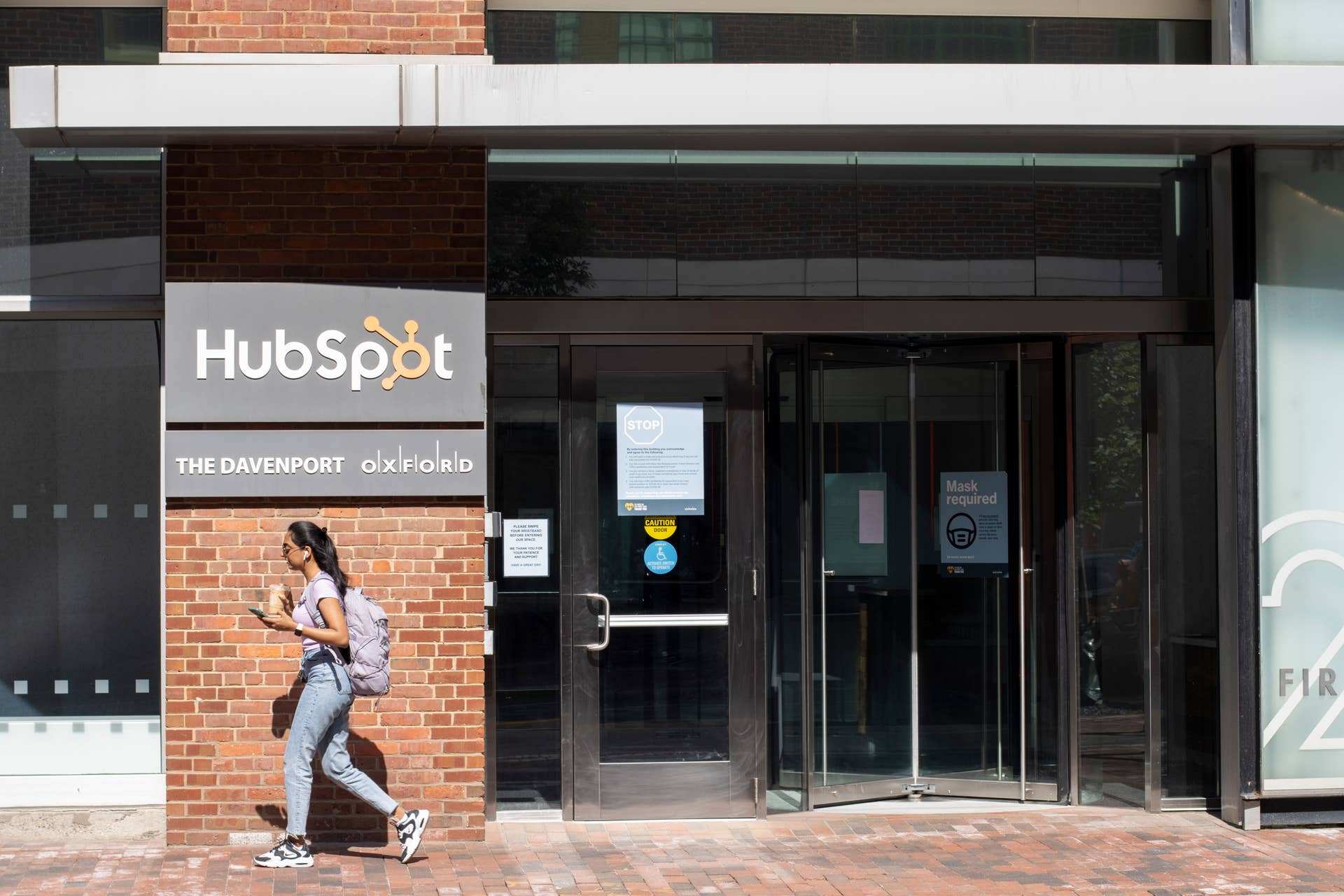
HubSpot, which provides software that businesses use to manage marketing, sales, and customer service, is reducing its workforce by about 7%, eliminating nearly 660 jobs, CEO Yamini Rangan told employees in an Oct. 6 message.
HubSpot brings functions such as customer relationship management, or CRM, marketing automation, and customer support onto one platform.
Its core competition includes companies such as Salesforce and Microsoft through Dynamics, while HubSpot also competes with specialized marketing and customer-service products, including Adobe’s Marketo, Mailchimp, and Zendesk.
HubSpot itself lists those products among the platforms it compares its software against.
The layoffs are part of a broader restructuring that will change how HubSpot organizes its product teams, reduce management layers, and give smaller teams more ownership over decisions, according to CEO Rangan.
More Layoffs:
- Disney cuts 300 jobs and major overhaul puts hundreds more at risk
- Microsoft cuts hundreds more jobs as restructuring deepens
- Oracle layoffs top 2,500 workers as AI spending surges
Rangan said the company has spent the past year shifting its strategy from “building software that helps customers grow to deliver outcomes for them with AI.”
Consequently, HubSpot’s products, pricing, and the way it serves customers are changing.
In an increasingly competitive space, Rangan says the company wants to change how it participates.
But she drew an important distinction between the company’s AI strategy and the job cuts.
“This is not driven by AI-related efficiencies,” she said.
She also said the restructuring was not simply a cost-cutting exercise. Instead, HubSpot wants to put more resources behind what it views as its biggest opportunities while creating a flatter organization with fewer management layers.
The company’s SEC filing provides more detail on the financial impact.
HubSpot expects the restructuring to cost approximately $65 million to $75 million, primarily for severance, notice periods, employee transition costs, and benefits.
Most of those charges are expected during the fourth quarter of 2026.
HubSpot expects the restructuring and elimination of jobs to be substantially completed by the end of the first quarter of 2027, although timing will vary based on local laws.
Related cash payments are expected to be largely completed by June 30, 2027.
Employees leaving the company will generally receive 20 weeks of base pay plus one additional week for every year of service, up to 30 weeks, according to HubSpot.
U.S. workers will also receive five months of COBRA coverage as a lump-sum payment, while departing employees will have access to six months of career-transition services.
Affected workers will also be allowed to keep their company laptops after company information is removed, as well as work-from-home equipment such as monitors and keyboards.
HubSpot layoffs come despite growing revenue
The restructuring does not come amidst a shrinking business.
In its most recent second-quarter results, the company reported $911.7 million in revenue, up 20% from a year earlier.
Subscription revenue, which makes up the vast majority of HubSpot’s business, also climbed 20% to $894.0 million.
The company reported GAAP operating income of $43.3 million, reversing a $24.6 million operating loss in the same quarter last year.
HubSpot also generated $43.3 million in GAAP net income, compared with a $3.3 million loss during the same quarter in 2025.
Its customer count increased 14% to more than 306,000.
HubSpot also reaffirmed its previously issued third-quarter and full-year revenue and non-GAAP profit guidance.
The company also said it remains confident in the longer-term operating-margin targets it presented to investors in September.
This is not the first time HubSpot has made a reduction of this size.
In January 2023, the company also announced plans to cut about 7% of its workforce, affecting approximately 500 employees.
At the time, HubSpot said its business had boomed during the pandemic before slowing more sharply than expected in 2022, as inflation, currency volatility, tighter customer budgets, and longer purchase cycles weighed on growth.
Three years later, the percentage of workers laid off is the same, but the reasoning is different.
Related: Formerly bankrupt buffet chain comes back after 6-year shutdown