I’m sure most of us have had that moment on a flight when we realize there’s something we could be getting done if only the Wi-Fi worked. Maybe it’s finishing some pending work, catching up on a newsletter, or just something else while we’re thousands of feet in the air.
About 3 weeks ago, I took my friend to buy his new car, and I found myself relying on in-flight Wi-Fi to check a running swing trade and catch up on work. It has now got me thinking about how much our expectations have changed.
Being connected in the air is no longer just a bonus. For many passengers, it’s becoming something they expect to work. That’s what makes the fight between Delta CEO Ed Bastian and Elon Musk more interesting than just a public disagreement.
At its core, it’s a battle over who gets to build the infrastructure that keeps passengers connected at 30,000 feet, and who captures the billions of dollars that could follow.
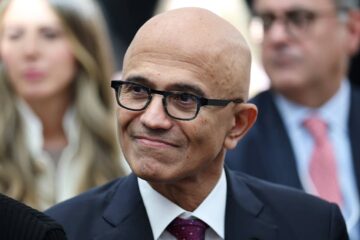
Delta Air Lines (DAL) CEO Ed Bastian sat down with CNBC on Oct. 9, 2026, after the airline reported record September-quarter operating revenue of $20.2 billion, according to Delta.
In the Interview, both addressed Musk’s Sep. 30 tweet saying Bastian would “lose his job” over Delta’s decision to reject Starlink. Bastian responds with ten words.
There’s no tit for tat as far as I’m concerned.
Also Read: Delta Air Lines Inc. Latest News
What Bastian actually said about Starlink, and why the real story is more complicated
The narrative that dominated social media painted the Delta-Starlink split as personal. Bastian was blunt in dismantling it.
“We’ve been around Starlink for a lot of years,” he told CNBC. “We in fact gave SpaceX some of our planes to test it out on. It was fabulous.”
The problem was timing and terms, not personality. “They just weren’t ready to scale when we were ready to go,” Bastian said. “And we had disagreements on the business model in terms of access to the customer and various other things.”
More Airlines:
- Another airline cancels flights until August, offers some refunds
- Another airline will be dissolved, all flights canceled
- Airline shuts down, all flights grounded after accident
Sources have noted that a central sticking point was Delta’s branded Delta Sync portal. Delta wanted to retain control of its customer-facing interface, while Musk’s team pushed for a seamless connectivity experience that bypassed it.
For an airline like Delta, which has built a multibillion-dollar loyalty ecosystem around its customer relationships, handing that customer touchpoint to someone else is no small concession.
Bastian added, with no evident irony: “I’m a big fan of Starlink. I drive a Tesla.”
His reaction to Musk’s job-loss prediction was equally measured. “I don’t pay any attention to it. No reaction at all.”
Where Delta is going instead, and why Amazon is the bet
Delta’s next-generation connectivity is built around Amazon Leo (formerly Project Kuiper), a low-Earth orbit satellite constellation that Amazon is developing as a direct competitor to Starlink.
The Kuiper partnership gives Delta more than just bandwidth. It also opens the door to deeper ecosystem integration, including Amazon Prime content, gaming and in-flight entertainment features that align with the streaming economy’s evolution.
Delta prides itself on a premium customer experience, and therefore those integrations matter.
Related: Premium tickets could help Delta Air Lines beat Q3 earnings estimates
Meanwhile, Bastian outlined specific improvements passengers can expect in the near term. Viasat received FCC approval on Oct. 8 to launch its F3 satellite for U.S. carriers, according to Bastian at CNBC. Hughes’ multi-orbit “Fusion” system, which combines geostationary and low-Earth orbit routing, is expanding across Delta’s fleet.
“By the end of this year, our customers on both Hughes and Viasat are going to see meaningful improvements,” Bastian said.
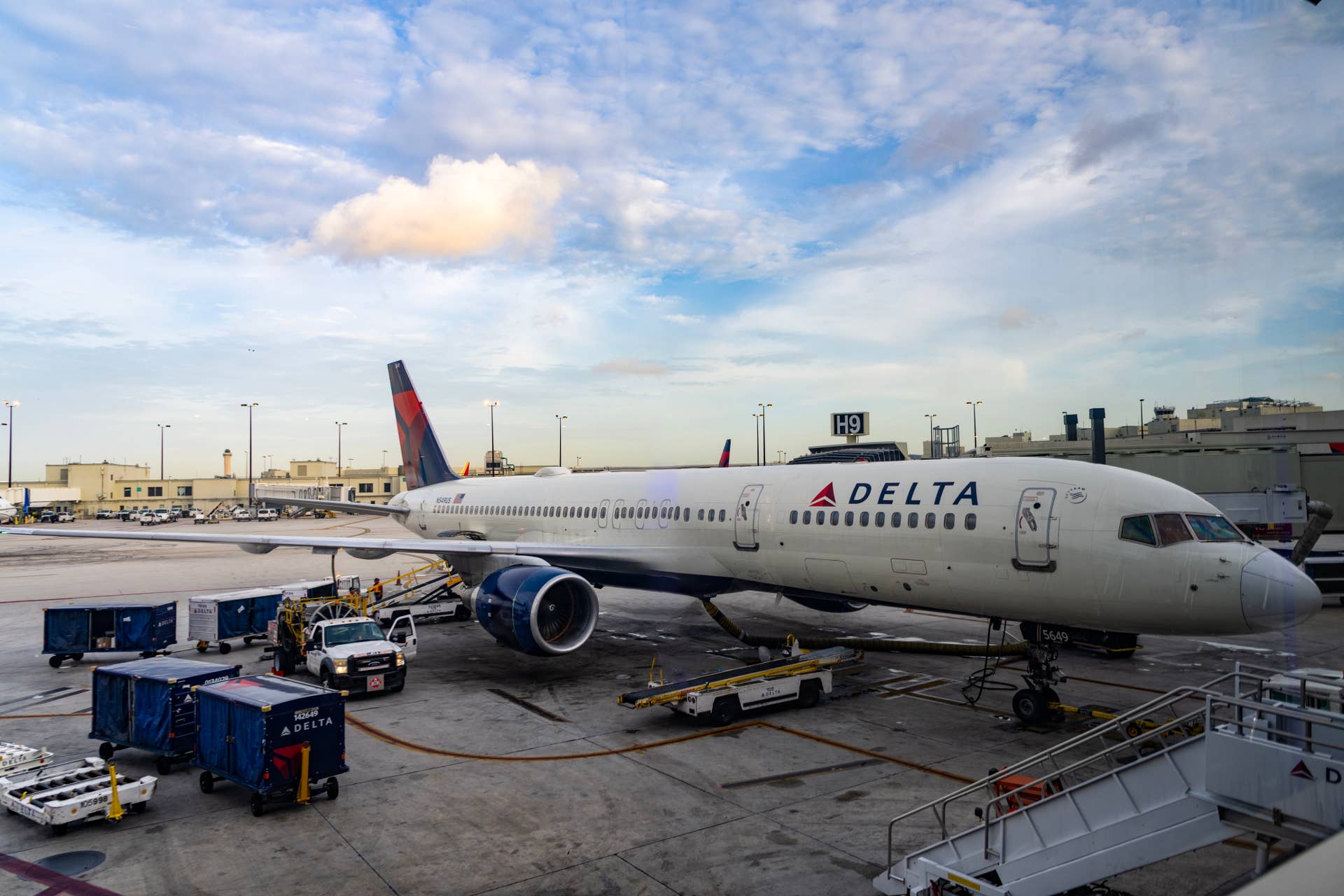
Delta currently has Viasat connectivity deployed across more than 1,000 planes with a completed global rollout, and Hughes handling over 400 Boeing 717s and regional jets, according to Hughes.
The Delta earnings that give Bastian leverage in this argument
I think Bastian can afford to be calm because the business results give him something to point to.
Q3 fiscal 2026 operating revenue of $20.2 billion was a record, according to Delta‘s earnings release. Pre-tax income was $1.1 billion. Operating cash flow was $1.7 billion. Adjusted earnings were $1.72 per share, missing Wall Street expectations (which ranged from $1.75 to $1.77 per share) and marking its first earnings miss in two years.
Delta led all carriers in on-time arrival and departure performance for the quarter and received the Skytrax award for Best Airline Staff Service in North America for the fifth consecutive year.
All of this while absorbing $4.14 billion in fuel costs, a 62% year-over-year increase, as the aftermath of the Iran war sent jet fuel to $3.61 per gallon for the quarter. Delta expects approximately $4.25 per gallon in Q4 with increased refinery benefits from Monroe Energy.
All of that performance is evident in the company’s stock price, which is up only 19.33% year-to-date and 39.45% over the past year, according to Yahoo Finance.
For the traveler on that red-eye who needed Wi-Fi to work, the airline rivalry playing out on X is irrelevant. What matters is whether the connection holds over Kansas. Bastian is betting that controlled, branded, Amazon-backed connectivity wins that test.
On this other end, Musk is betting Starlink’s track record at United and American proves otherwise. The customer decides.